
Shopify Website ADA Lawsuit and Demand Letter Guidance
Business owners often assume that physical storefronts are the only spaces subject to the Americans with Disabilities Act. However, federal courts increasingly rule that digital storefronts must also provide equal access to all consumers. If you operate a Shopify website, ignoring digital accessibility exposes your business to significant legal and financial risks.
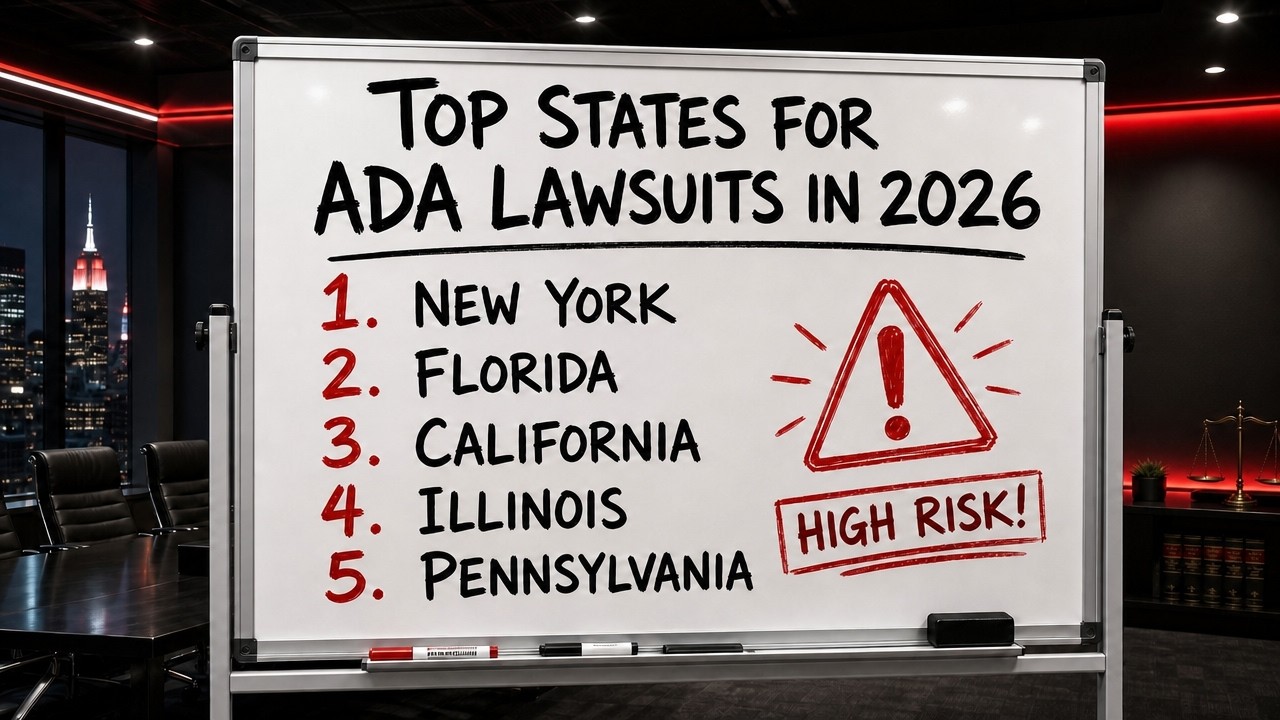
Plaintiffs file thousands of ADA website compliance lawsuits each year, targeting companies of all sizes. These lawsuits generally require businesses to come into compliance with the Americans with Disabilities Act, pay their own legal counsel, cover the plaintiff's attorney fees, and potentially pay statutory damages depending on the jurisdiction.
Operating an e-commerce platform requires diligent oversight. A proactive approach to website design, regular accessibility auditing, and a thorough understanding of the current legal landscape are essential to protect your business assets.
The Legal Framework: How the ADA Applies to E-commerce
The Americans with Disabilities Act was enacted to ensure individuals with disabilities have equal opportunities in public life. While the legislation was drafted before the internet became a central hub of commerce, its application has evolved.
Title III of the ADA
Title III of the ADA strictly prohibits discrimination on the basis of disability in the activities of places of public accommodation. In recent years, the Department of Justice and numerous federal circuits have affirmed that consumer-facing websites qualify as places of public accommodation. Consequently, your Shopify store must be accessible to users with visual, auditory, cognitive, and motor impairments.
The WCAG Standard
Because the ADA does not explicitly prescribe technical standards for websites, courts and the Department of Justice rely on the Web Content Accessibility Guidelines (WCAG). Currently, WCAG 2.1 Level AA is recognized as the standard metric for digital compliance. Meeting these guidelines demonstrates a good-faith effort to accommodate all users and provides a strong defensive posture against potential litigation.
Common Accessibility Barriers on Shopify Stores
Many out-of-the-box Shopify themes and third-party applications fail to meet WCAG standards natively. Business owners must actively monitor their digital storefronts for specific compliance failures.
Missing Alternative Text: Screen-reading software relies on embedded alt-text to describe images to visually impaired users. Failing to provide accurate alt-text for product photos is a primary trigger for ADA lawsuits.
Inadequate Color Contrast: Text must stand out clearly against its background. Low contrast ratios prevent users with visual impairments or color blindness from reading product descriptions, pricing, and navigation menus.
Lack of Keyboard Navigability: Many users with motor disabilities cannot use a traditional mouse. Your Shopify site must be fully operable using only keyboard commands, ensuring that users can navigate menus, add items to their cart, and complete the checkout process seamlessly.
Missing Form Labels: Contact forms and checkout fields must have clear programmatic labels so that assistive technologies can interpret the data required for each field.
The Financial Impact of ADA Lawsuits
Facing an ADA-related legal challenge is an expensive and time-consuming process. When a plaintiff files a lawsuit alleging that your Shopify website is inaccessible, the financial exposure extends far beyond the immediate cost of web development.
Legal defense costs accrue rapidly. You must retain experienced counsel to navigate federal or state court proceedings. If the plaintiff prevails, the ADA mandates that the defendant pay the plaintiff's attorney fees, which can easily exceed tens of thousands of dollars. Furthermore, states like California and New York allow plaintiffs to seek statutory damages for civil rights violations under state-specific laws, compounding potential liability.
Settling these claims out of court is common, but it still requires the payment of a settlement fee and an immediate, binding agreement to remediate the website.
Proactive Measures to Mitigate Liability
Protecting your Shopify business requires a systematic approach to web accessibility. Implementing a structured compliance strategy is far more cost-effective than defending against a federal lawsuit.
Conduct a Comprehensive Audit: Utilize automated scanning tools alongside manual testing by accessibility experts. Automated tools can catch basic code errors, but manual testing is required to evaluate true usability for individuals relying on assistive technology.
Implement Remediation Protocols: Work with qualified developers to address the barriers identified during the audit. Prioritize critical user pathways, such as the homepage, product pages, and the checkout sequence.
Publish an Accessibility Statement: Place a clear, prominent accessibility statement in your website's footer. This document should outline your commitment to digital inclusion, detail the steps you are taking to meet WCAG standards, and provide a direct contact method for users who encounter barriers.
Monitor Third-Party Applications: Shopify relies on third-party plugins for features like reviews, chatbots, and loyalty programs. You are legally responsible for the accessibility of any application integrated into your website.
Frequently Asked Questions About Shopify ADA Compliance
Does Shopify automatically ensure my website is ADA compliant?
No. While Shopify provides the infrastructure for your e-commerce business, you are solely responsible for the content, design choices, and third-party applications you implement. Shopify's terms of service place the burden of legal compliance entirely on the individual merchant.
Are small businesses exempt from ADA website compliance?
No. Title III of the ADA applies to all businesses that operate places of public accommodation, regardless of their revenue or employee count. Small e-commerce startups are frequently targeted by plaintiff firms precisely because they often lack robust legal and technical resources.
Can an accessibility overlay widget protect me from lawsuits?
Relying solely on automated overlay widgets is highly risky. I our very substantial experience, these do not achieve true WCAG compliance. In fact, websites utilizing overlay widgets continue to be frequent targets of ADA litigation.
Secure Your Digital Storefront Against ADA Litigation
Ignoring website accessibility is a severe operational risk. The legal precedent is firmly established, and plaintiff firms are continuously scanning e-commerce platforms for compliance failures. If your Shopify site has already been the subject of an ADA demand letter or lawsuit, contact us today to discuss your situation.














Ragdoll Hit is the perfect blend of silly physics and competitive fun.
My girlfriend and I take turns playing Level Devil and we end up laughing at each other's fails all night.