
Nolan Klein
2 days ago

800+ ADA LAWSUITS HANDLED &
18+ YEARS OF ADA LITIGATION &
100% ATTENTION TO YOUR CASE.
WATCH OUR ADA ATTORNEY DISCUSS ADA LAWSUITS ON 60 MINUTES WITH ANDERSON COOPER
Receiving a legal complaint or a demand letter regarding your website’s accessibility can be an unsettling experience for any business owner. You may find yourself accused of violating federal law simply because your digital presence is not fully compatible with screen reading software or other assistive technologies. This is compounding when an ADA website lawsuit is filed in Illinois, where you may have no physical presence.
These lawsuits, filed under Title III of the Americans with Disabilities Act (ADA), have become increasingly common in Illinois, targeting businesses of all sizes across various industries.
The surge in litigation is driven by a combination of legal ambiguity and aggressive plaintiffs' firms.
While the ADA was originally drafted to ensure physical access to public accommodations, courts have increasingly interpreted these protections to extend to the digital realm. For Illinois defendants, this creates a complex liability landscape that requires immediate and strategic legal attention. Ignoring a demand letter or a lawsuit is rarely a viable option and can lead to default judgments and escalating costs.
Securing experienced legal counsel that has handled many Illinois website ADA claims is the critical first step in navigating this challenge. A specialized ADA defense strategy does more than just address the immediate lawsuit; it helps safeguard your business against future claims. Understanding the legal mechanisms at play in Illinois and the Seventh Circuit Court of Appeals is essential for mounting a robust defense and minimizing financial exposure.
To defend against these Illinois ADA website lawsuits, one must first understand the statute being leveraged. Title III of the ADA prohibits discrimination on the basis of disability in the "full and equal enjoyment of the goods, services, facilities, privileges, advantages, or accommodations of any place of public accommodation."
Historically, this applied to physical barriers like narrow doorways or a lack of wheelchair ramps. However, widely accepted legal interpretations now assert that websites and mobile applications functioning as "places of public accommodation" must also be accessible. When a website lacks features such as alternative text for images, keyboard navigability, or proper color contrast, plaintiffs argue that they are being denied equal access to the business's services.
In most cases, plaintiffs cite the Web Content Accessibility Guidelines (WCAG) as the standard for compliance. Although the ADA itself does not explicitly codify WCAG into law, courts and the Department of Justice frequently reference these technical standards (specifically WCAG 2.1 Level AA) to determine whether a website is accessible.
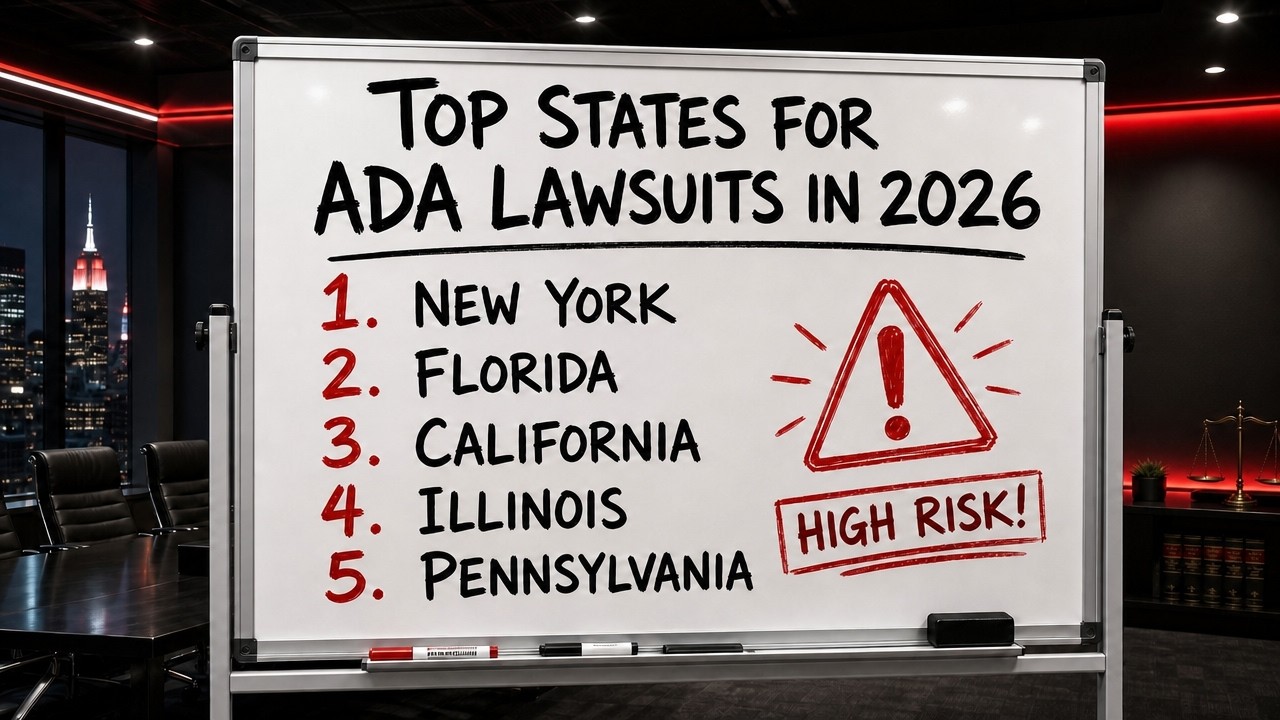
Illinois has become a significant jurisdiction for ADA website filings. Business owners in Chicago and surrounding areas frequently face lawsuits from "serial plaintiffs"—individuals who file dozens, sometimes hundreds, of nearly identical lawsuits against different entities.
The legal environment in Illinois is influenced heavily by the Seventh Circuit Court of Appeals. Defense strategies here often hinge on specific legal concepts such as standing. "Standing" refers to the plaintiff's right to bring a lawsuit. To have standing, a plaintiff must demonstrate that they suffered a concrete injury.
In the context of website ADA suits, a defense attorney may challenge whether the plaintiff genuinely intended to use the business’s services or if they visited the website solely to manufacture a lawsuit. If the court determines the plaintiff had no real intent to visit the physical store or utilize the services offered, the case may be dismissed for lack of standing. This is a nuanced area of law that requires a defense lawyer with specific experience in federal court practice.
When you retain an Illinois ADA defense lawyer, they will evaluate the merits of the claim and determine the most cost-effective course of action. A robust defense strategy typically involves a multi-pronged approach.
Not every claim of inaccessibility is factually accurate. Automated scanning tools used by plaintiffs' attorneys often generate false positives. Your legal counsel can work with technical experts to audit your website and determine if the alleged barriers actually exist or if they prevent access as claimed.
In many instances, the most prudent business decision is to negotiate a settlement to avoid the high costs of prolonged federal litigation. An experienced negotiator understands the "market rate" for these settlements in Illinois and can often resolve the matter for a fraction of the initial demand. This process typically involves an agreement to remediate the website within a specific timeframe in exchange for a release of liability.
Defending a lawsuit is only half the battle; preventing the next one is equally important. Achieving and maintaining compliance with the Web Content Accessibility Guidelines (WCAG) is the strongest shield against future litigation.
Key areas of WCAG compliance include:
Text Alternatives: Providing text alternatives for non-text content so that it can be changed into other forms people need, such as large print, braille, speech, symbols, or simpler language.
Keyboard Accessibility: Ensuring all functionality is available from a keyboard, as many users with motor disabilities cannot use a mouse.
Navigable Content: Providing ways to help users navigate, find content, and determine where they are within the site structure.
Readable Text: Making text content readable and understandable, which includes utilizing proper contrast ratios between text and background colors.
Your defense attorney can coordinate with accessibility consultants to ensure your digital assets meet these standards, providing a layer of insulation against future "tester" plaintiffs.
If your business has been served with an Illinois ADA website lawsuit, contact us today to discuss your case.