top of page

SAN DIEGO ADA LAWSUIT DEFENSE
1000+ ADA LAWSUITS HANDLED NATIONWIDE &
20+ YEARS OF ADA LITIGATION &
750+ BUSINESSES REPRESENTED.
WATCH OUR MANAGING ATTORNEY DISCUSS ADA LAWSUITS ON 60 MINUTES WITH ANDERSON COOPER
SAN DIEGO ADA DEFENSE AND COMPLIANCE
San Diego businesses facing ADA Title III lawsuits—whether for physical accessibility barriers or inaccessible websites—have several defense strategies available, including challenging plaintiff standing, proving the barrier doesn't exist, and demonstrating good-faith compliance efforts. Acting quickly with an experienced ADA defense attorney is critical, since California's Unruh Civil Rights Act allows plaintiffs to seek statutory damages of $4,000 per violation, in addition to attorney's fees.
Receiving notice of an ADA lawsuit can feel overwhelming, especially if your business has never encountered this type of legal challenge before. San Diego has become one of the most active jurisdictions in California for ADA Title III litigation, with both physical accessibility claims and website accessibility lawsuits filed against small and medium-sized businesses at a steady pace.
Read below to learn more about what San Diego business owners need to know regarding ADA lawsuit defense, covering both physical accessibility claims (think parking lots, ramps, and restrooms) and the newer wave of website accessibility litigation. You'll learn why these lawsuits happen, what defense strategies are available, and the steps you can take right now to protect your business and your reputation.
Why Are ADA Lawsuits So Common in San Diego?
California businesses face a unique legal landscape. Under the federal Americans with Disabilities Act (ADA), plaintiffs can only sue for injunctive relief—meaning they can force a business to fix the violation, but they generally cannot collect monetary damages. California's Unruh Civil Rights Act changes that equation entirely.
The Unruh Act allows plaintiffs to seek statutory damages of $4,000 per violation, plus attorney's fees. This financial incentive has made California, and San Diego specifically, a hotbed for ADA-related litigation. A single visit to a business location (or a single visit to a website) can form the basis of a lawsuit, and plaintiffs' attorneys often file multiple cases against similar businesses in a short time span.
What Counts as a Physical Accessibility Violation?
Physical accessibility lawsuits typically focus on barriers that prevent individuals with disabilities from accessing a business location. Common allegations include:
-
Inaccessible or missing designated parking spaces
-
Lack of proper ramps or curb cuts
-
Doorways too narrow for wheelchair access
-
Restrooms that don't meet ADA specifications (grab bars, turning radius, sink height)
-
Service counters that are too high
-
Inaccessible pathways due to obstructions or uneven surfaces
What Counts as a Website Accessibility Violation?
Website accessibility lawsuits have grown significantly in recent years. These claims generally argue that a business's website is a "place of public accommodation" under the ADA and must be accessible to users with disabilities, particularly those using screen readers or other assistive technology. Common allegations include:
-
Missing alt text on images, making content unreadable to screen readers
-
Inaccessible navigation menus or forms
-
Poor color contrast that affects users with low vision
-
Videos without captions or audio descriptions
-
Websites that cannot be navigated using a keyboard alone
Unlike physical accessibility standards, which are governed by detailed ADA Standards for Accessible Design, there is currently no formal federal regulation specifying exact website accessibility requirements. Many courts and plaintiffs reference the Web Content Accessibility Guidelines (WCAG) 2.1 as the informal benchmark, but the lack of codified federal standards creates genuine legal ambiguity—one that an experienced defense attorney can use to your advantage.
What Should You Do If You've Been Sued?
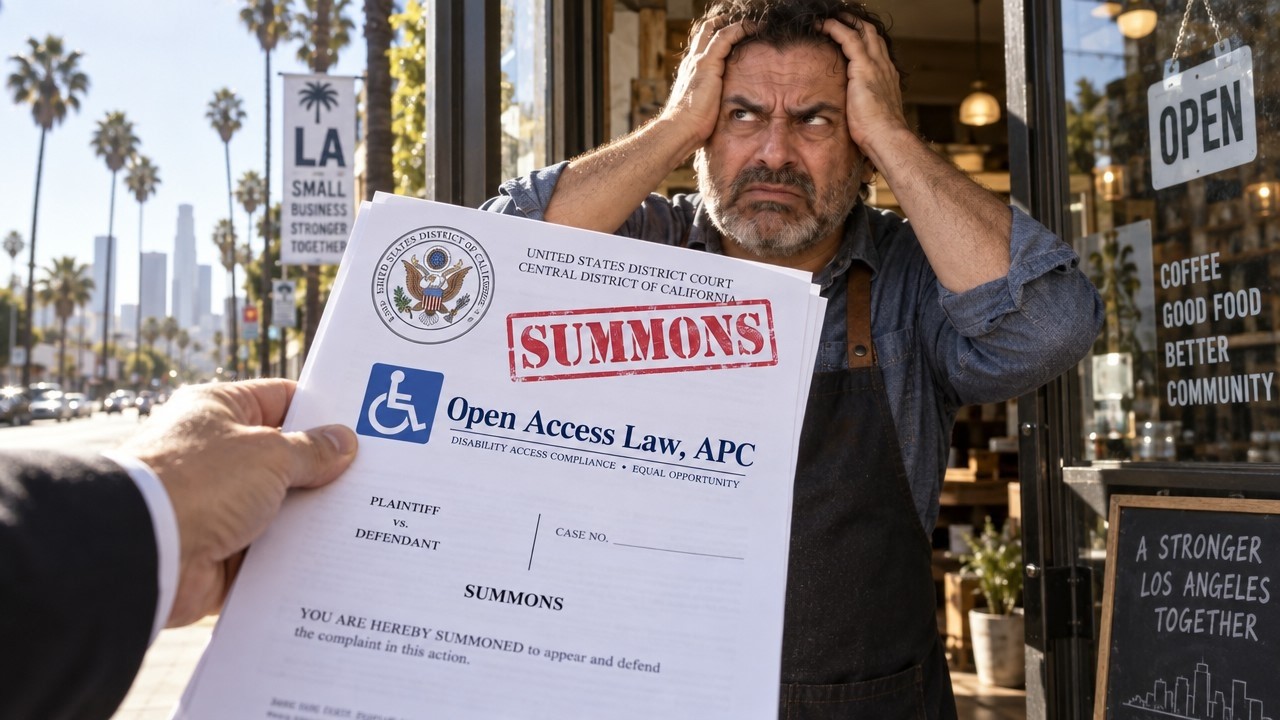
If you've received a demand letter or lawsuit, your first instinct might be to panic, or to try to resolve things quickly on your own. Neither approach serves your interests. Here's what to do instead.
Step 1: Don't Ignore the Lawsuit or Demand Letter
Ignoring a demand letter or failing to respond to a lawsuit within the required timeframe can result in a default judgment against your business. Even if you believe the claim is meritless, you need to respond through proper legal channels.
Step 2: Avoid Making Direct Contact With the Plaintiff or Their Attorney
Business owners sometimes try to settle quickly by contacting the plaintiff directly. This can backfire, potentially creating unfavorable admissions or documentation that damages your defense. Any communication should go through your attorney.
Step 3: Consult an ADA Defense Attorney Immediately
An attorney experienced in California ADA litigation can evaluate the specific allegations, assess your exposure, and identify the most effective defense strategy for your situation. Given the complexity of both physical and digital accessibility law, this isn't a process to navigate alone.
Step 4: Document Your Current Compliance Efforts
Gather any records showing prior accessibility improvements, inspections, or good-faith efforts at compliance. This documentation can play a significant role in your defense, particularly for claims involving alleged violations that may have already been corrected.
What Defense Strategies Are Available in ADA Lawsuits?
Several legal strategies exist to defend against ADA and Unruh Act claims, depending on the specifics of your case.
Challenging the plaintiff's standing. To bring a claim, a plaintiff generally must show they encountered the barrier and were genuinely harmed by it, or that they intend to return to the business in the future. Many ADA lawsuits are filed by "serial plaintiffs" who visit numerous businesses specifically to identify violations. Demonstrating that the plaintiff lacks genuine intent to return, or never actually encountered the alleged barrier, can be a powerful defense.
Proving the alleged violation doesn't exist or has been remediated. An on-site inspection or technical website audit can sometimes reveal that the alleged barrier either doesn't exist as described or has already been fixed.
Arguing technical infeasibility. In some physical accessibility cases, full compliance may not be structurally feasible due to the building's age or design. Businesses may still be required to provide equivalent access through alternative means.
Demonstrating good-faith compliance efforts. Courts and opposing counsel may view a business more favorably if it can show a documented history of accessibility improvements, even if isolated issues remain.
Choose the standing challenge if the plaintiff has a pattern of similar filings against other local businesses; choose remediation-based defenses if the alleged barrier has already been corrected. The right approach depends entirely on the specifics of the claim, which is why early legal consultation matters.
What Does ADA Lawsuit Defense Typically Cost?
ADA lawsuits generally require businesses to come into compliance with the Americans with Disabilities Act, and may require paying your own attorney's fees, the plaintiff's attorney's fees, and potentially statutory damages under the Unruh Act. Costs vary significantly based on the complexity of the case, whether it settles early, and the extent of remediation required.
Early legal intervention often reduces total costs substantially.
Businesses that attempt to self-represent or delay consulting an attorney frequently face higher expenses and less favorable outcomes than those who act quickly with proper legal guidance.
Protect Your Business With Experienced ADA Defense Counsel
ADA lawsuits, whether centered on physical barriers or website accessibility, require a precise understanding of federal and California state law. San Diego business owners facing these claims benefit most from acting quickly, documenting their compliance efforts, and working with an attorney who understands both the legal and technical dimensions of accessibility litigation.
If you've received a demand letter or lawsuit notice, don't wait for the situation to escalate. Consult with an experienced San Diego ADA defense attorney to evaluate your options, protect your business, and work toward the most favorable resolution possible.
Frequently Asked Questions
How much can an ADA lawsuit cost a San Diego business?
Costs vary by case, but California's Unruh Civil Rights Act allows statutory damages of $4,000 per violation, plus attorney's fees for both sides. Early resolution with legal counsel typically reduces total exposure.
Can a business be sued for an inaccessible website in California?
Yes. Plaintiffs have increasingly filed lawsuits arguing that inaccessible websites violate the ADA as "places of public accommodation," even though no formal federal regulation currently defines specific website accessibility standards.
What is a "serial plaintiff" in ADA litigation?
A serial plaintiff is an individual who files numerous ADA lawsuits against multiple businesses, often visiting locations specifically to identify accessibility violations. Courts sometimes scrutinize these plaintiffs' standing more closely.
Should I settle an ADA lawsuit or fight it?
This depends on the strength of the claim, the cost of remediation, and the specific circumstances of the alleged violation. An experienced ADA defense attorney can evaluate whether settlement or litigation serves your business's best interests.
How long do I have to respond to an ADA demand letter?
Response timeframes vary depending on whether you've received a demand letter or a formal lawsuit summons. Formal lawsuits have strict deadlines, often 30 days, making immediate legal consultation essential.












bottom of page