
ADA Title III: A Guide to Policies, Procedures, and Auxiliary Aids
The Americans with Disabilities Act (ADA) is one of the most significant civil rights laws in the United States, prohibiting discrimination against individuals with disabilities in all areas of public life. For business owners and operators, ADA compliance requires more than physical ramps and accessible parking spaces. It necessitates comprehensive policies and procedures designed to ensure effective communication. This guide details the obligations regarding auxiliary aids and services under Title III, providing the technical knowledge required to minimize liability and ensure regulatory compliance.
Defining "Public Accommodation"
To understand your obligations, you must first determine if your entity falls under the classification of a public accommodation. Under Title III, a public accommodation is a private entity that owns, leases (or leases to), or operates a place of public accommodation.
The categories cover a vast range of commerce and services, including but not limited to:
Lodging: Hotels, motels, and inns.
Food and Drink: Restaurants and bars.
Entertainment: Movie theaters and concert halls.
Retail: Grocery stores, hardware stores, and shopping centers.
Service Establishments: Laundromats, banks, law offices, and medical offices.
Recreation: Parks, zoos, and amusement parks.
Education: Private schools and other places of education.
If your organization fits within these categories, you are legally required to adhere to Title III regulations regarding non-discrimination and accessibility.
Policy Requirements for Title III Compliance
The core mandate of Title III is that individuals with disabilities must not be denied the full and equal enjoyment of the "goods, services, facilities, privileges, advantages, or accommodations" of any place of public accommodation.
To achieve this, businesses must modify policies, practices, and procedures when necessary to afford such goods and services to individuals with disabilities, unless the entity can demonstrate that making such modifications would fundamentally alter the nature of the goods or services.
Key policy requirements include:
Eligibility Criteria: You cannot use eligibility criteria that screen out individuals with disabilities unless such criteria are necessary for the provision of the service.
Reasonable Modifications: You must make reasonable modifications to policies to accommodate individuals with disabilities (e.g., modifying a "no pets" policy to allow service animals).
Effective Communication: You must take steps to ensure that individuals with disabilities are not excluded or treated differently due to the absence of auxiliary aids and services.
Auxiliary Aids and Services Explained
The requirement for effective communication is a cornerstone of ADA Title III. Public accommodations must provide auxiliary aids and services where necessary to ensure effective communication with individuals who have vision, hearing, or speech impairments.
The goal is to ensure that communication with people with disabilities is as effective as communication with people without disabilities. The type of auxiliary aid or service necessary to ensure effective communication will vary in accordance with the method of communication used by the individual; the nature, length, and complexity of the communication involved; and the context in which the communication is taking place.
It is critical to note that the entity generally has the flexibility to choose the specific aid or service, provided that the chosen method results in effective communication.
Examples of Auxiliary Aids and Services
The range of auxiliary aids and services is broad, catering to different types of disabilities.
For Individuals Who Are Deaf or Hard of Hearing
Effective communication often requires aids that bridge the gap between spoken and visual language.
Qualified Interpreters: Sign language interpreters provided on-site or through Video Remote Interpreting (VRI) services.
Note-takers: Professional note-takers for meetings or educational settings.
Written Materials: Exchange of written notes for simple transactions.
Assistive Listening Systems: Devices that amplify sound directly into a hearing aid or headset.
Open and Closed Captioning: Real-time captioning for video content or live presentations.
For Individuals Who Are Blind or Have Low Vision
Services must ensure that visual information is conveyed accessibly.
Qualified Readers: Staff members reading documents aloud.
Accessible Formats: Documents provided in Braille, large print, or accessible electronic formats.
Audio Recordings: Providing information via audio files.
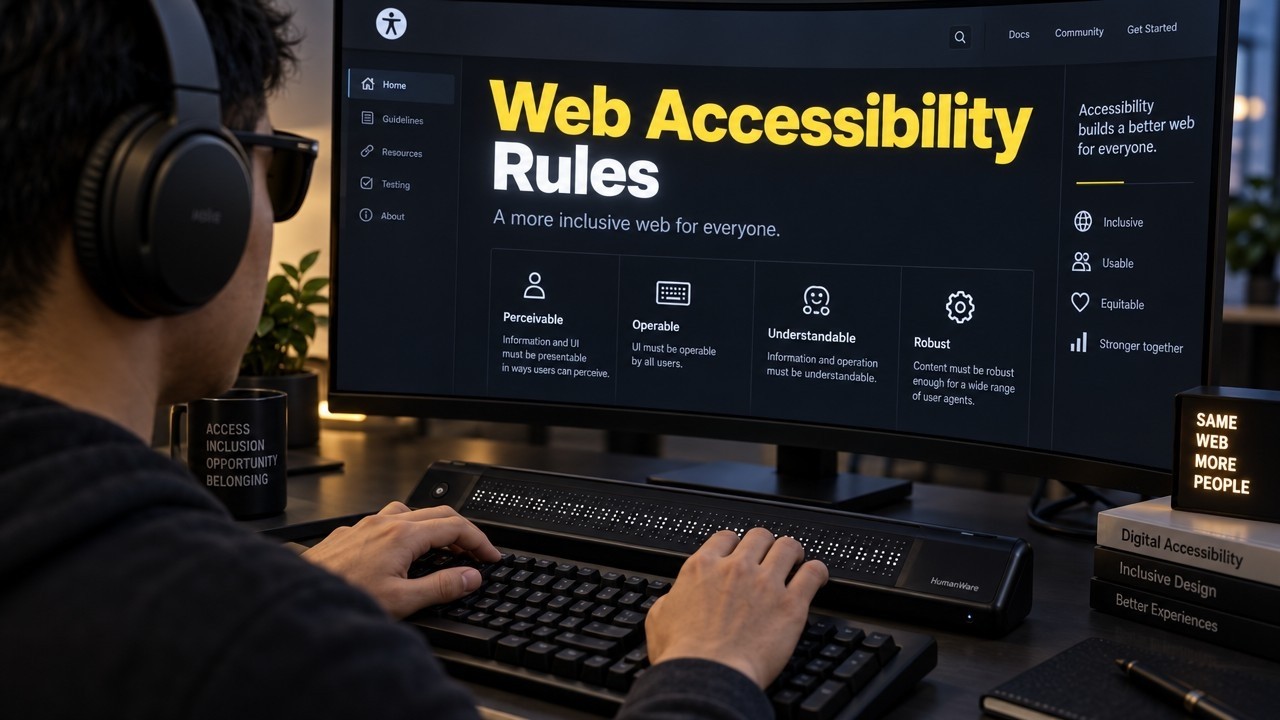
Screen Reader Compatibility: Ensuring websites and digital kiosks are coded to function with screen reading software.
For Individuals with Speech Impairments
Speech-to-Speech Translators: Services that facilitate telephone communication.
Communication Boards: Visual aids containing pictures or words that the individual can point to.
Paper and Pencil: Allowing time for written communication.
Procedures for Providing Aids and Services
Establishing a protocol for providing these aids is essential for risk management. A reactive approach often leads to compliance failures.
Assessment of Needs
The most effective way to determine the appropriate auxiliary aid is to consult directly with the individual with a disability. They are the experts on their own communication needs. While the ultimate decision rests with the public accommodation, giving primary consideration to the individual's request is a best practice that reduces the likelihood of a dispute.
Undue Burden and Fundamental Alteration
The ADA does not require the provision of any auxiliary aid or service that would result in an undue burden or a fundamental alteration in the nature of the goods or services.
Undue Burden: Significant difficulty or expense. This is evaluated based on the nature and cost of the action needed versus the overall financial resources of the site or parent corporation.
Fundamental Alteration: A change so significant that it alters the essential nature of the goods or services being offered.
If a specific aid poses an undue burden, the public accommodation must provide an alternative aid or service that is effective, if one exists, that does not result in such a burden.
Best Practices for ADA Compliance
To maintain a defensible position against ADA lawsuits, organizations should implement rigorous compliance strategies.
Written Policies: Develop and maintain written policies regarding ADA compliance, specifically detailing how staff should respond to requests for auxiliary aids.
Staff Training: Policies are useless if staff are unaware of them. Train all client-facing employees on how to interact with individuals with disabilities, how to accept relay calls, and how to access interpreting services if needed.
Digital Audits: Regularly audit websites and mobile applications against WCAG (Web Content Accessibility Guidelines) standards. Digital accessibility is a frequent target of current litigation.
Advance Contracts: Establish relationships with service providers (such as ASL interpreting agencies) in advance. Scrambling to find an interpreter at the last minute can result in service denial.
Common Pitfalls to Avoid
Many businesses face litigation due to avoidable errors in judgment or policy execution.
Relying on Family Members: Do not require an individual with a disability to bring their own interpreter, such as a friend or family member. You may rely on a companion to interpret only in an emergency involving an imminent threat to safety or if the individual specifically requests it and the companion agrees.
Imposing Surcharges: It is strictly prohibited to place a surcharge on a particular individual with a disability or any group of individuals with disabilities to cover the cost of providing auxiliary aids or services. The business must absorb these costs as overhead.
Assuming One Size Fits All: Providing large print materials does not accommodate a person who reads Braille. Do not assume one type of auxiliary aid satisfies all requests.
Resources and Support
For complex situations, rely on authoritative resources to guide your decision-making.
The U.S. Department of Justice (DOJ): The DOJ enforces the ADA and provides technical assistance manuals and guidance documents at ADA.gov.
ADA National Network: Provides information, guidance, and training on the Americans with Disabilities Act.
Legal Counsel: Given the complexity of "undue burden" defenses and specific state laws that may overlay federal requirements, consulting with an attorney, such as Nolan Klein, specializing in ADA defense is recommended for specific legal advice.
The Strategic Importance of Compliance
Compliance with ADA Title III regarding policy, procedure, and auxiliary aids is not merely a legal formality; it is a critical component of risk management and operational integrity. Failure to provide effective communication can result in federal investigations, private lawsuits, and significant reputational damage.
By proactively establishing robust procedures for auxiliary aids and services, businesses protect themselves from liability while ensuring they can serve the entire public effectively. Review your current operational protocols today to ensure they meet the rigorous standards set forth by the ADA.
















Comments