
ADA Claims are Moving to State Courts
Receiving notice of a lawsuit under the Americans with Disabilities Act (ADA) is a stressful event for any business owner. Historically, these cases were almost exclusively filed in federal court because the ADA is a federal statute. However, a distinct shift in litigation strategy is occurring across the United States. Plaintiffs and their attorneys are increasingly bypassing federal courts and filing ADA lawsuits in state courts instead.
This change is not a coincidence. It is a tactical response to recent federal rulings that have made it more difficult for "serial plaintiffs"—individuals who file hundreds of lawsuits, often without intending to patronize the businesses they sue—to maintain their cases. For a business owner facing litigation, understanding why this shift is happening is critical to forming a successful defense strategy.
This migration to state venues fundamentally alters the risks involved. State laws often carry different penalties, including potential monetary damages that are not available under federal law. If you have been sued, or are concerned about compliance, recognizing the nuances of state-court ADA litigation is the first step toward protecting your business, your reputation, and your bottom line.
The Federal Crackdown on "Standing"
To understand why lawsuits are moving to state courts, one must first understand the concept of "standing." In the legal world, standing refers to a plaintiff's right to bring a lawsuit. To have standing in federal court, a plaintiff must show they suffered a concrete injury.
For years, federal courts were relatively lenient regarding ADA standing. A plaintiff could sue a business for technical violations—such as a parking lot slope that was too steep or a website that wasn't screen-reader accessible—even if they were a "tester" who only visited the business to find a violation.
The Impact of Recent Rulings
Federal courts, particularly the Second, Fifth, and Tenth Circuits, have recently tightened these requirements. They are increasingly dismissing cases where the plaintiff cannot prove they genuinely intended to visit the business or use its services.
If a plaintiff lives 500 miles away from a small bakery they sued for a website violation, federal judges are now more likely to ask: "Did you really intend to buy a donut, or did you just want to file a lawsuit?" If the answer suggests the latter, the case gets dismissed for lack of standing. This higher bar has forced plaintiffs' attorneys to look for a friendlier venue: state court.
Why State Courts Are the New Battleground
State courts often operate under different procedural rules than federal courts. While the ADA is a federal law, state courts have "concurrent jurisdiction," meaning they can hear ADA cases. More importantly, many states have their own civil rights laws that parallel the ADA but offer easier paths for plaintiffs.
Lower Burden for Standing
Many state courts have not adopted the strict "injury-in-fact" requirements seen in recent federal decisions. In some jurisdictions, the mere existence of a barrier to access is considered enough of a violation to allow a lawsuit to proceed, regardless of whether the plaintiff intended to become a loyal customer. This lower barrier to entry makes state court an attractive alternative for serial filers who want to avoid the scrutiny of federal judges.
Statutory Damages: The Financial Risk
The most significant difference between federal and state ADA litigation is the potential for financial damages.
Federal ADA: Under Title III of the ADA, a plaintiff cannot recover money for themselves. The remedies are generally limited to injunctive relief (a court order forcing the business to fix the violation) and the payment of the plaintiff's attorney’s fees.
State Laws: Many state equivalents of the ADA allow for monetary damages.
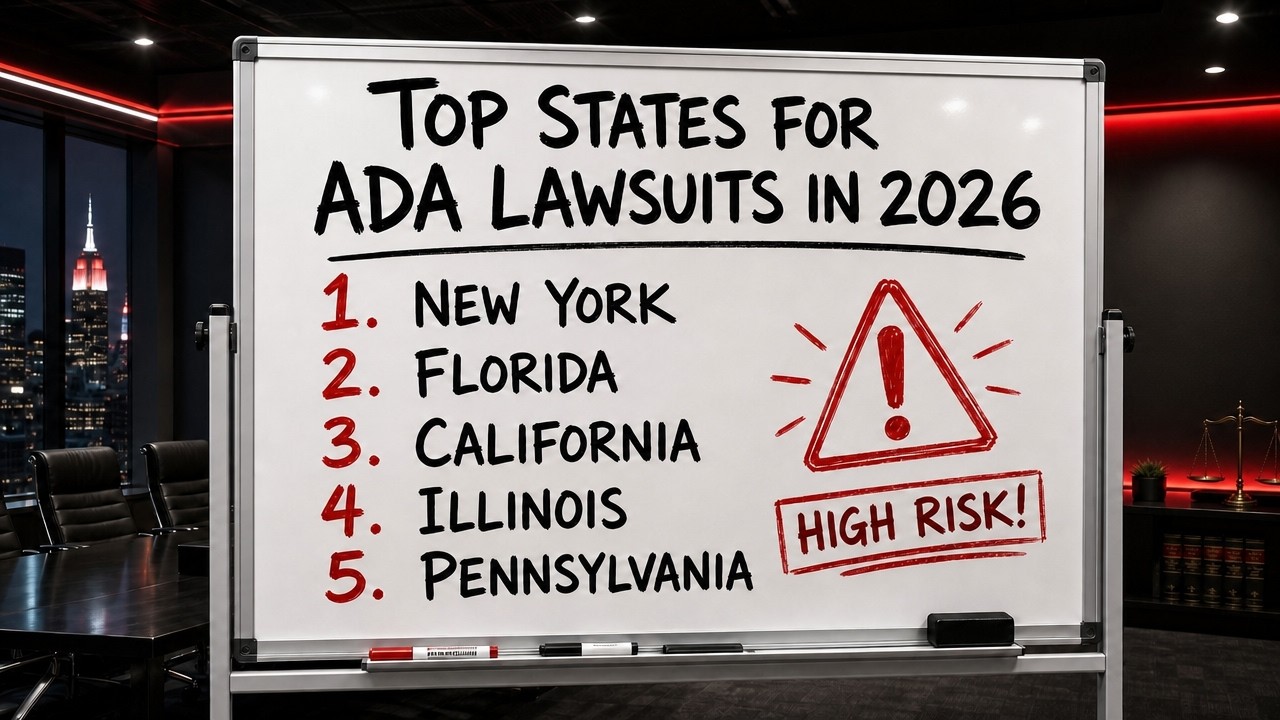
California: The Unruh Civil Rights Act allows plaintiffs to recover statutory damages of $4,000 per violation.
New York: The New York State Human Rights Law and City Human Rights Law provide for compensatory damages and civil penalties.
Florida: While similar to the ADA, specific state consumer protection statutes are occasionally leveraged to increase settlement pressure.
When a case is filed in state court, the financial exposure for a business owner increases significantly. You are fighting not just to fix a ramp or a website code, but to avoid writing a substantial check for statutory damages.
Strategic Defense in State Court
Defending a case in state court requires a different approach than defending one in federal court. The timeline is often faster, the discovery rules (the process of exchanging evidence) can be broader, and the judges may be less familiar with the technical nuances of ADA compliance.
The Problem with "Removal"
In the past, defense attorneys would often "remove" a case from state court to federal court. This is a procedural maneuver to transfer the case to a jurisdiction that might be more favorable to the business.
However, because federal courts are now dismissing cases for lack of standing, removing a case can backfire. If you remove a case to federal court, and the federal judge dismisses it because the plaintiff lacks standing, the case doesn't disappear. Instead, it is sometimes "remanded" (sent back) to the state court. This results in a waste of legal fees and time, landing you exactly where you started.
Challenging Specific State Claims
Effective defense in state court involves attacking the specific state-law claims. For example:
Intent to Return: Even in state court, defense counsel can challenge the credibility of the plaintiff. Using surveillance, social media investigation, or deposition testimony to prove the plaintiff never intended to patronize the business can still be a viable defense strategy to reduce settlement value.
Mootness: If the violation is remediated immediately, some state courts may consider the claim "moot" (resolved). However, because many state laws allow for damages based on the past violation, fixing the issue does not always automatically end the lawsuit.
Technical Compliance: Proving that the alleged violation does not actually violate the 2010 ADA Standards for Accessible Design. Often, plaintiffs allege violations based on incorrect interpretations of the technical standards.
Practical Steps for Business Owners
If you own a business, the shift to state court litigation emphasizes the need for proactive compliance. Relying on the hope that a federal judge will dismiss a tester's lawsuit is no longer a guaranteed safety net.
1. Conduct a Comprehensive Audit
Do not wait for a lawsuit to check your compliance. Hire a Certified Access Specialist (CASp) or a qualified ADA consultant to inspect your physical premises. For your digital presence, ensure your website meets WCAG 2.1 AA standards. An audit provides a roadmap for remediation and can sometimes serve as evidence of good faith efforts in court.
2. Prioritize Remediation
If your audit finds barriers—such as a lack of accessible parking signage, improper door handle hardware, or images on your website missing "alt text"—fix them immediately. The longer a violation exists, the higher the risk of a state court lawsuit seeking damages for continued non-compliance.
3. Review Your Insurance
Check your Employment Practices Liability Insurance (EPLI) or General Liability policy. Some policies cover defense costs for discrimination claims, including ADA lawsuits. However, many standard policies exclude them. Knowing your coverage status is vital for financial planning.
4. Consult an Expert Defense Attorney
If you are served with a complaint, do not ignore it. State courts have strict deadlines for filing a response (an "Answer"). Missing a deadline can result in a default judgment against your business. Contact an attorney who specifically focuses on ADA defense. General practitioners may not be aware of the specific "standing" defenses or the nuances between federal and state accessibility standards.
Frequently Asked Questions
Can I be sued in state court if I am in compliance with the federal ADA?
Technically, state laws often incorporate ADA standards. However, some states have building codes that are stricter than the federal ADA. If you comply with the 2010 ADA Standards but violate a stricter state code, you could still face liability in state court.
Why do lawyers prefer state court for ADA website lawsuits?
State courts in jurisdictions like New York and California have been more receptive to the theory that websites are "places of public accommodation." Federal appeals courts are split on this issue. By filing in state court, plaintiffs avoid the uncertainty of federal appellate rulings that might say the ADA doesn't apply to websites.
Is it cheaper to settle or fight an ADA lawsuit in state court?
This depends on the specifics of the case. Because state laws often allow for damages, plaintiff demands in state court are typically higher than in federal court. A "nuisance settlement" might be more expensive than before. However, a strong defense strategy that challenges the plaintiff’s credibility can sometimes force a dismissal or a significantly lower settlement.
What if my business is "grandfathered" in?
There is no "grandfather clause" in the ADA. Buildings built before 1990 must remove barriers if it is "readily achievable" to do so. State laws vary, but generally, age of the building is not a complete defense against accessibility requirements.
Securing Your Business Future
The migration of ADA lawsuits from federal to state courts represents a new chapter in accessibility litigation. It signals that plaintiffs are adapting their tactics to maintain their revenue streams. For business owners, this requires a shift in mindset from reactive panic to proactive management.
By understanding the venue, the specific state laws you face, and the motivations of the opposing counsel, you can make informed decisions. Whether it is through aggressive litigation to dismiss a frivolous claim or a negotiated resolution to minimize costs, the goal remains the same: ensuring your business remains compliant, profitable, and open to everyone.















Цей інформаційний сайт зручний тим, що на ньому можна знайти статті на зовсім різні теми. Не обов’язково приходити сюди з конкретним питанням, адже під час перегляду часто трапляються цікаві публікації, які хочеться прочитати. Матеріали розраховані на звичайного читача і написані зрозуміло.
Якщо хочеться почитати щось корисне без складної подачі, можна зазирнути сюди. Тематика досить широка: від здоров’я й сімейних питань до дому, технологій, фінансів та ідей для відпочинку.