
Douglas Schapiro and Schapiro Law Group ADA Lawsuits
Douglas Schapiro of Schapiro Law Group is a plaintiff's attorney known for filing Americans with Disabilities Act (ADA) accessibility lawsuits. Based in Florida, he represents disabled clients who allege that businesses fail to meet ADA accessibility standards, making him a recognizable name in the field of high-volume ADA litigation.
If your business has received a demand letter or lawsuit citing the Americans with Disabilities Act, the name Douglas Schapiro may be familiar to you. He is among a group of plaintiff's attorneys who have built a practice around ADA Title III accessibility claims—a category of litigation that has grown sharply over the past decade.
This profile examines who Douglas Schapiro is, the type of cases he files, and what his litigation activity means for business owners and property managers. Understanding the attorneys behind these lawsuits is the first step toward preparing an effective response and protecting your business from costly legal exposure.
Who are Douglas Schapiro and Schapiro Law Group?
Douglas Schapiro is a Florida-based plaintiff's attorney who concentrates his practice on accessibility litigation under Title III of the Americans with Disabilities Act. Title III prohibits discrimination on the basis of disability in places of public accommodation—a broad category that includes retail stores, restaurants, hotels, medical offices, and, increasingly, commercial websites.
Schapiro typically represents individual plaintiffs with disabilities who claim they encountered barriers to access at a business location. His name appears on filings in federal courts, including courts in Florida, Texas, and elsewhere.
What types of ADA lawsuits does Douglas Schapiro file?
Physical accessibility claims: These cases allege that a brick-and-mortar business contains architectural barriers that prevent access for people with disabilities. Common examples include non-compliant parking spaces, inaccessible restrooms, improper ramp slopes, and counters or aisles that do not meet ADA dimensional requirements.
Why are ADA accessibility lawsuits so common?
The volume of ADA Title III lawsuits has increased substantially over the last decade. Several structural features of the law explain why a relatively small number of attorneys file a large share of these cases.
Attorney's fees drive the economics. Title III of the ADA does not permit plaintiffs to recover monetary damages in federal court. Instead, it allows for injunctive relief—a court order requiring the business to fix the violation—and the recovery of reasonable attorney's fees and costs. This fee-shifting provision means that the financial incentive for a plaintiff's attorney lies in the legal fees, not in damages awarded to the client.
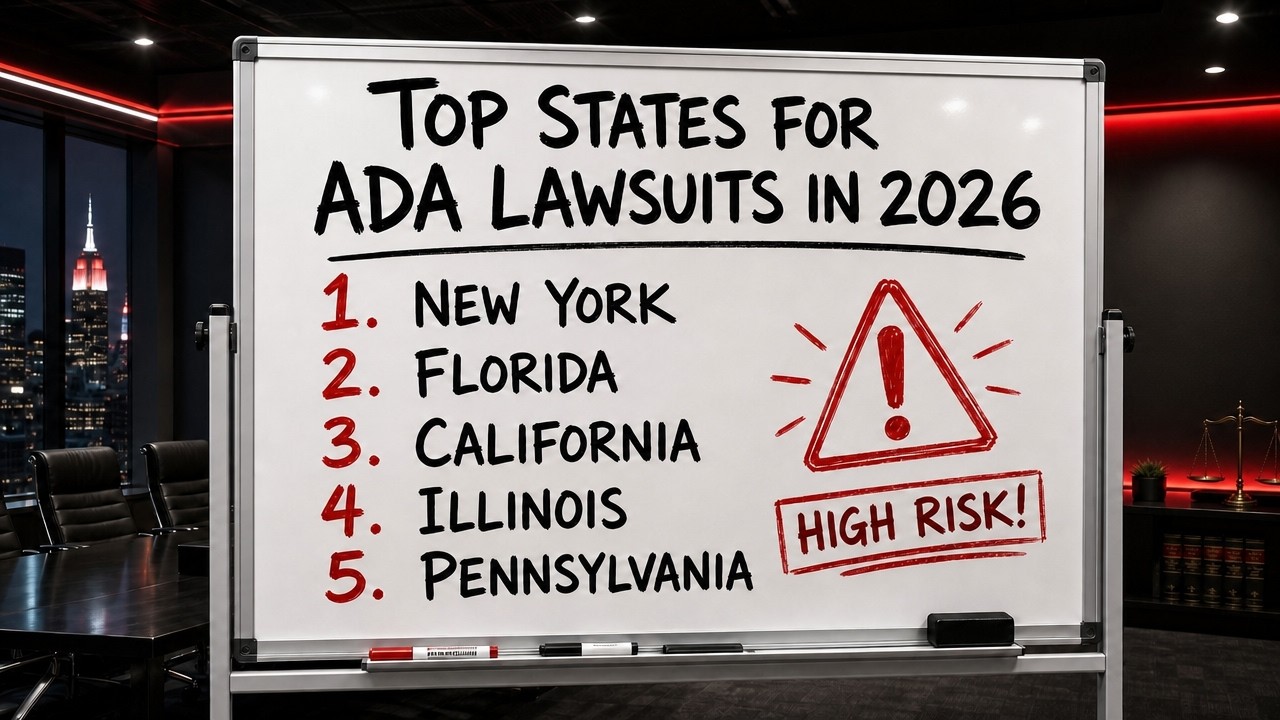
Florida and California lead in case volume. These two states consistently account for the majority of federal ADA Title III filings nationwide. Florida's concentration of public accommodations, combined with an active plaintiff's bar, makes it a focal point for this type of litigation.
What does a Douglas Schapiro lawsuit mean for a business?
Receiving a complaint filed by Douglas Schapiro and the Schapiro Law Group—or any ADA plaintiff's attorney—warrants a prompt and measured response. Ignoring the matter is rarely advisable, as ADA cases proceed in federal court and can escalate quickly.
A typical resolution path includes the following considerations:
Compliance is usually the central remedy. Because Title III provides for injunctive relief, the practical outcome of most cases is a requirement that the business bring its property or website into compliance with accessibility standards.
Fee exposure is the primary financial risk. A settling business generally pays its own legal costs and may be required to contribute toward the plaintiff's attorney's fees. Early resolution often reduces this exposure compared to prolonged litigation.
Defenses may be available. Depending on the facts, a defendant may challenge the plaintiff's standing—specifically, whether the plaintiff suffered a genuine, concrete injury and has a plausible intent to return. Standing is one of the most frequently litigated issues in ADA accessibility cases.
How should a business respond to an ADA lawsuit?
If your business has been named in an ADA lawsuit, consider the following steps:
Do not ignore the complaint. Federal litigation carries strict deadlines. Failing to respond can result in a default judgment.
Consult an experienced ADA defense attorney. Defense counsel familiar with Title III litigation can evaluate the merits of the claim, assess standing issues, and advise on settlement versus defense.
Document your current accessibility status. Whether the claim concerns a physical location or a website, an accurate record of existing conditions is essential to your defense and to any remediation plan.
Develop a remediation plan. Demonstrating a good-faith commitment to compliance can strengthen your negotiating position and reduce the risk of repeat litigation.
Protecting Your Business From ADA Litigation
Douglas Schapiro and Schapiro Law Group is one of several plaintiff's attorneys whose practices center on ADA Title III accessibility claims. While the volume of these lawsuits can make them appear routine, each complaint carries real legal and financial consequences for the business named as a defendant.
The most effective defense is preparation. Proactively auditing both your physical premises and your website for accessibility compliance reduces your exposure before a lawsuit ever arrives. If you have already received a demand letter or complaint, retaining experienced ADA defense counsel promptly is the surest way to protect your interests and resolve the matter on favorable terms.
Frequently Asked Questions
Who is Douglas Schapiro? Douglas Schapiro is a Florida-based plaintiff's attorney who files Americans with Disabilities Act (ADA) accessibility lawsuits on behalf of disabled clients in multiple states. His cases typically involve physical accessibility barriers at businesses.
What is ADA Title III? Title III of the Americans with Disabilities Act prohibits discrimination based on disability in places of public accommodation, including retail stores, restaurants, hotels, and—in many jurisdictions—commercial websites. It is the section of the ADA most commonly invoked in accessibility lawsuits.
Can ADA plaintiffs recover money damages? Under federal law, ADA Title III plaintiffs cannot recover monetary damages. They may obtain injunctive relief requiring the business to fix the violation, along with reasonable attorney's fees and costs. Some state laws, however, do permit additional damages.
Why do so few attorneys file so many ADA lawsuits? The ADA's fee-shifting provision allows prevailing plaintiffs to recover attorney's fees, creating an economic incentive for attorneys who specialize in high-volume accessibility litigation. Florida and California account for the majority of these federal filings, with New York, Texas, Illinois, and other states close behind.
What should I do if my business receives an ADA lawsuit? Do not ignore it. Consult an experienced ADA defense attorney at Law Offices of Nolan Klein immediately, document your current accessibility status, and develop a remediation plan. Federal litigation carries strict deadlines, and failing to respond can result in a default judgment.














Comments