
Top 5 States for ADA Website Lawsuits in 2026
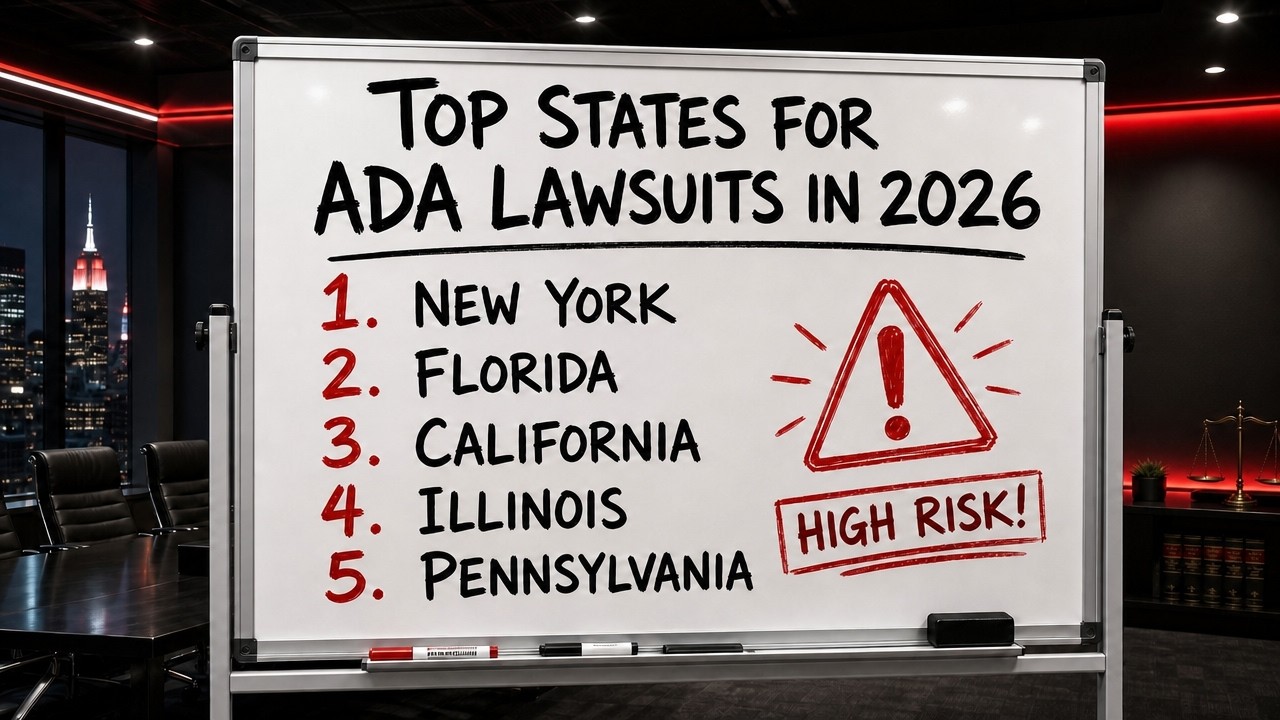
New York, Florida, California, Pennsylvania, and Illinois consistently rank among the top states for ADA website accessibility lawsuits, driven by high plaintiff activity and favorable state court interpretations of the Americans with Disabilities Act. Businesses operating in these states - or who sells goods online to residents of these states - can reduce their legal exposure by conducting regular WCAG 2.1 compliance audits, remediating accessibility barriers, and maintaining documented evidence of good-faith efforts.
If your business has an online presence and customers in these states in 2026, understanding why these lawsuits happen — and how to prevent them — is essential to protecting your bottom line.
Why Are Some States More Litigious Than Others?
ADA Title III governs "places of public accommodation," and courts have increasingly interpreted websites as falling under this umbrella. However, interpretation varies by jurisdiction. States with plaintiff-friendly courts, high concentrations of serial filers, and state-level accessibility statutes (which often allow for additional damages) tend to see far more website accessibility claims than others.
Top 5 States for ADA Website Lawsuits so far in 2026
New York
New York remains one of the most active states for ADA website litigation. Its courts have been receptive to website accessibility claims, and the state's own human rights law adds another layer of liability beyond federal ADA claims.
Florida
Florida courts have handled a high volume of ADA website cases, partly due to a concentration of serial plaintiffs who file multiple suits against similar categories of businesses, such as retailers and restaurants.
California
California businesses face a unique risk: the Unruh Civil Rights Act. This state law allows plaintiffs to recover minimum statutory damages per violation, making California claims potentially more costly than a standalone federal ADA claim.
Pennsylvania
Pennsylvania, particularly within the Western District, has seen a steady stream of website accessibility filings, often targeting small and mid-sized businesses with limited compliance resources.
Illinois
Illinois rounds out the top five, with plaintiffs frequently targeting businesses that lack basic accessibility features like alt text, keyboard navigation, and properly labeled forms.
How Can Businesses Avoid an ADA Website Lawsuit?
Conduct a WCAG 2.1 Compliance Audit
Most courts and settlement agreements reference the Web Content Accessibility Guidelines (WCAG) 2.1, Level AA, as the de facto standard. Choose a WCAG audit if your goal is to establish a defensible, court-recognized compliance benchmark.
Remediate Common Barriers
Frequent accessibility issues include:
Missing alternative text for images
Poor color contrast
Forms that aren't screen-reader compatible
Non-keyboard-accessible navigation menus
Missing video captions
Addressing these issues proactively closes the most common gaps plaintiffs' attorneys look for.
Maintain Documentation
Keep records of your accessibility audits, remediation timelines, and staff training. This documentation demonstrates good-faith compliance efforts, which can influence settlement negotiations or court outcomes if litigation occurs.
Monitor for Compliance on an Ongoing Basis
Accessibility isn't a one-time fix. Websites change frequently, and new content can introduce new barriers. Choose ongoing monitoring tools or periodic manual audits if your site is updated regularly.
Consult an ADA Defense Attorney Early
If you receive a demand letter or lawsuit, consult an experienced ADA defense attorney before responding. Early legal guidance can help you evaluate the plaintiff's standing, assess settlement options, and avoid missteps that increase liability.
Protect Your Business Before a Lawsuit Happens
Businesses operating in New York, Florida, California, Pennsylvania, or Illinois face a measurably higher risk of ADA website litigation. Taking proactive steps now — auditing your site, fixing known barriers, and documenting your efforts — puts you in a far stronger position than waiting for a demand letter to arrive.
Frequently Asked Questions
What triggers most ADA website lawsuits? Most lawsuits stem from missing alt text, poor color contrast, inaccessible forms, and non-keyboard-navigable menus that prevent screen reader users from accessing site content.
How much can an ADA website lawsuit cost a business? Costs vary by state and case specifics, but businesses typically pay for their own legal defense, the plaintiff's attorney fees, and remediation costs. States like California may add statutory damages under laws like the Unruh Civil Rights Act.
Is WCAG compliance legally required? WCAG 2.1 isn't formally codified into the ADA, but courts and settlement agreements widely reference it as the accepted accessibility standard for websites.
Can small businesses be sued under the ADA for website accessibility? Yes. Business size doesn't exempt a company from ADA obligations, and small businesses are frequently targeted due to limited compliance resources.
What should I do if I receive an ADA demand letter? Contact an ADA defense attorney immediately. Avoid responding directly to the plaintiff's counsel until you understand your legal options and potential exposure.














Comments