
New York ADA vs. NY Human Rights Laws: Businesses Beware
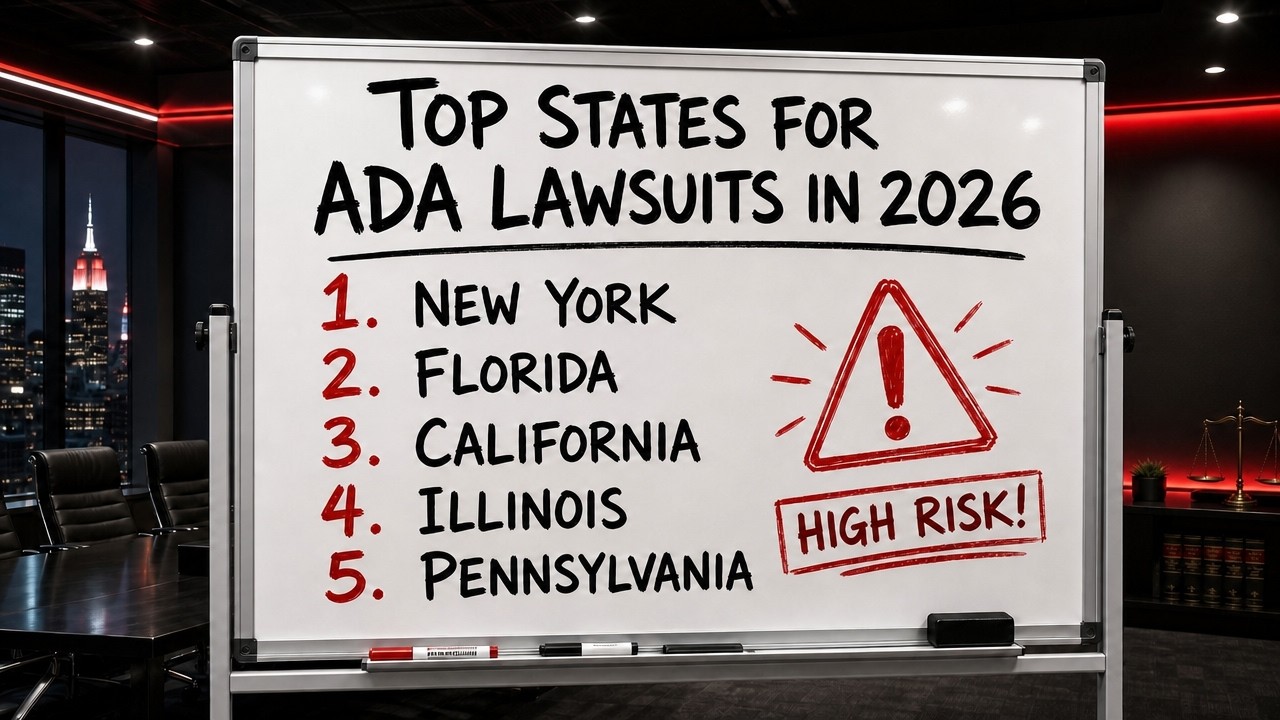
The ADA, New York State Human Rights Law (NYSHRL), and New York City Human Rights Law (NYCHRL) all prohibit disability discrimination, but NYSHRL and NYCHRL impose broader liability standards and higher damages than the ADA. Businesses facing website accessibility or physical barrier lawsuits in New York often face claims under all three laws simultaneously, increasing both legal exposure and settlement pressure.
Businesses operating in New York - or who sell to New York customers - face a unique legal landscape when it comes to disability access claims. A single lawsuit alleging an inaccessible website or a physical barrier at a storefront can trigger liability under three separate statutes: the Americans with Disabilities Act (ADA), the NYSHRL, and the NYCHRL. Understanding how these laws interact is essential for any business owner or landlord defending against these claims.
How does the ADA differ from New York's human rights laws?
The ADA is a federal civil rights law. Title III of the ADA prohibits discrimination on the basis of disability in places of public accommodation, which courts have increasingly interpreted to include commercial websites. However, the ADA does not authorize monetary damages for private plaintiffs—only injunctive relief and attorney's fees.
New York's human rights laws go further. Both the NYSHRL and NYCHRL allow plaintiffs to recover compensatory damages, punitive damages (under the NYCHRL), and attorney's fees. The NYCHRL, in particular, is construed more liberally than the ADA, meaning plaintiffs face a lower bar to establish a violation.
Why do plaintiffs file claims under all three laws at once?
Plaintiffs' attorneys frequently plead ADA, NYSHRL, and NYCHRL claims together in a single complaint. This strategy allows plaintiffs to use the ADA's established legal framework to prove liability, while relying on New York law to unlock monetary damages unavailable under federal law alone.
This layered approach significantly raises the stakes for defendants. A business that might only face injunctive relief under the ADA could face substantial damages once NYSHRL and NYCHRL claims are added.
How does this interplay affect website accessibility lawsuits?
Website accessibility litigation has surged in New York federal and state courts. Plaintiffs allege that a company's website is incompatible with screen-reading software, violating Title III of the ADA. When the same complaint adds NYSHRL and NYCHRL claims, the business faces exposure to damages that the ADA alone would not permit.
Businesses should prioritize Web Content Accessibility Guidelines (WCAG) 2.1 Level AA compliance if minimizing litigation risk under all three statutes is the goal, since courts frequently reference WCAG standards when evaluating accessibility claims.
How does this interplay affect physical barrier lawsuits?
Physical accessibility claims—covering issues like non-compliant ramps, parking spaces, or entryways—follow a similar pattern. A plaintiff may allege an ADA Title III violation for the physical barrier, then add NYSHRL and NYCHRL claims to seek damages tied to the same alleged violation.
Because the NYCHRL is interpreted independently and more broadly than the ADA, a defense that succeeds against the federal claim will not necessarily defeat the city law claim.
What defense strategies address claims under all three laws?
Defense counsel experienced in this intersection of federal and state law typically evaluate:
Standing: Whether the plaintiff has demonstrated a genuine intent to return to the business or actually attempted to use the website.
Mootness: Whether barriers were remediated before or shortly after the lawsuit was filed.
Statutory differences: Whether the NYSHRL or NYCHRL claims require separate evidentiary showings than the ADA claim.
Damages exposure: Calculating realistic exposure under New York law versus the more limited ADA remedies.
Because the NYCHRL's liberal construction standard often works against defendants, an experienced attorney will tailor arguments to each statute rather than treating the claims as interchangeable.
Take proactive steps against multi-statute liability
Businesses operating in New York cannot treat ADA compliance as sufficient protection against disability access lawsuits. The NYSHRL and NYCHRL create independent and often broader liability, particularly when it comes to monetary damages. Conducting regular accessibility audits of both physical locations and digital platforms, and consulting with counsel experienced in all three statutes, remains the most effective way to reduce litigation risk.
Frequently Asked Questions
Can a business be sued under the ADA, NYSHRL, and NYCHRL for the same accessibility issue? Yes. Plaintiffs commonly file a single lawsuit alleging violations of all three laws based on the same underlying website or physical access issue.
Does the ADA allow plaintiffs to recover money damages? No. The ADA only permits injunctive relief and attorney's fees for private plaintiffs, not compensatory or punitive damages.
Why is the NYCHRL considered more favorable to plaintiffs than the ADA? Courts interpret the NYCHRL liberally, in favor of finding discrimination, which lowers the burden of proof compared to the ADA's stricter standard.
What is the fastest way to reduce exposure to these lawsuits? Conducting a professional accessibility audit of both websites (against WCAG 2.1 AA standards) and physical locations (against ADA Standards for Accessible Design) helps identify and remediate barriers before litigation arises.










Comments