
Robert Glen Myers: Missouri ADA Litigant
Robert Glen Myers is a frequent plaintiff who files lawsuits alleging that business websites violate Title III of the Americans with Disabilities Act (ADA). If your business receives a demand letter or lawsuit from Myers, contact our office so that we can review the case, assess your website's compliance with Web Content Accessibility Guidelines (WCAG), and formulate a strategic legal defense to minimize financial exposure.
Website accessibility litigation represents a significant and growing legal risk for modern businesses. Federal and state courts have documented a massive influx of lawsuits alleging that digital platforms fail to accommodate individuals with visual, hearing, or cognitive disabilities. A substantial portion of these legal actions is driven by frequent or serial plaintiffs who systematically target companies across various industries.
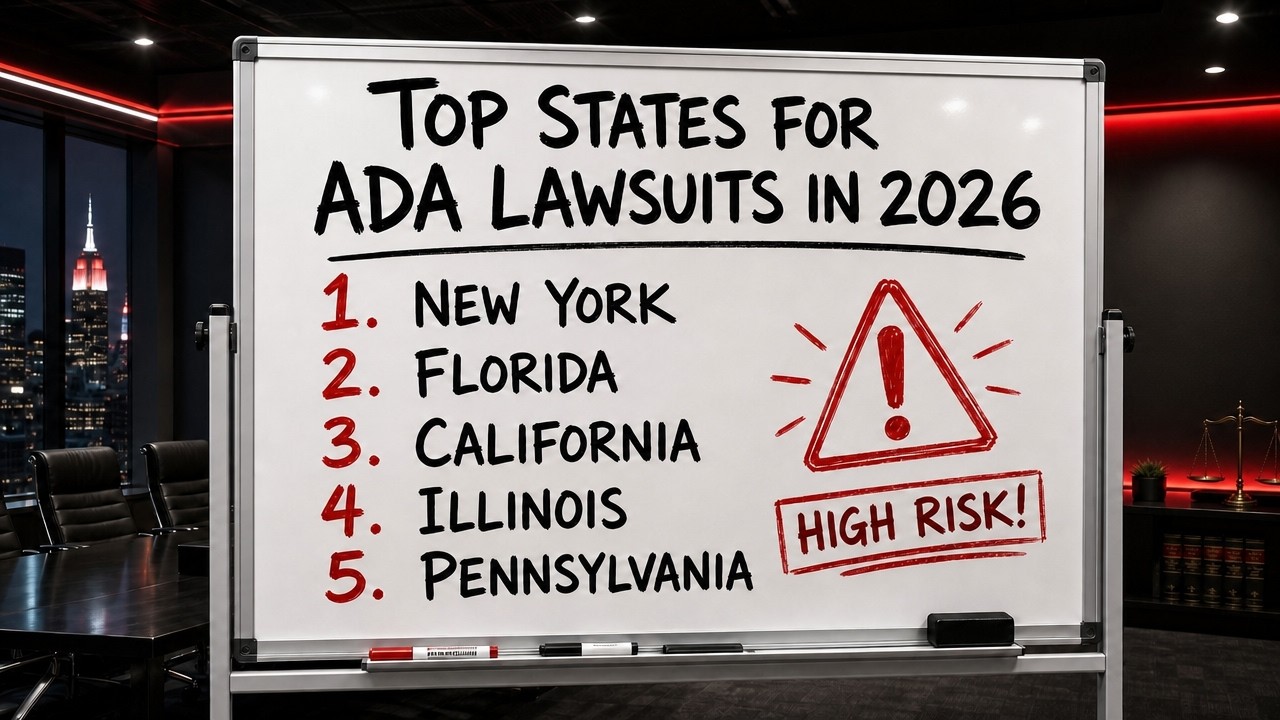
As of this writing, Robert Glen Myers has filed more than 150 lawsuits in Missouri federal courts. An example of a lawsuit that he filed in Missouri is Myers vs. Ball Enterprises, LLC:

Who is Robert Glen Myers in the Context of ADA Website Litigation?
In the realm of Americans with Disabilities Act litigation, certain individuals file dozens or even hundreds of lawsuits against retail business owners, e-commerce brands, and service providers. Robert Glen Myers operates within this framework. Plaintiffs in these scenarios often use automated scanning software or manual testing to identify websites that lack compatibility with assistive technologies, such as screen readers used by visually impaired individuals.
Once an accessibility barrier is identified, the plaintiff's legal counsel issues a demand letter or immediately files a formal complaint in federal or state court. These lawsuits generally assert that the defendant's website is a "place of public accommodation" under Title III of the ADA, and that the digital barriers prevent the plaintiff from accessing goods or services.
What Are the Common Allegations in These ADA Claims?
Lawsuits filed by Robert Glen Myers and similar plaintiffs generally cite failures to meet the Web Content Accessibility Guidelines (WCAG). While the ADA does not explicitly codify WCAG into law for private businesses, courts consistently use WCAG 2.1 Level AA as the baseline standard for digital accessibility.
When reviewing websites subject to complaints filed by Myers, defense attorneys routinely identify some or all the following:
Missing Alternative Text (Alt Text): Images on the website lack descriptive text, preventing screen reading software from conveying the visual content to blind users.
Deficient Keyboard Navigation: The website requires a mouse for navigation, making it impossible for users with motor impairments or visual disabilities to browse, select items, or complete checkout processes using a keyboard.
Empty Links and Buttons: Navigation elements lack descriptive labels, leaving assistive technology users without context regarding where a link leads or what a button executes.
Improper Form Labels: Checkout or contact forms do not clearly indicate what information is required in specific fields.
What Should You Do If You Receive an ADA Lawsuit from Robert Glen Myers?
Receiving an ADA lawsuit requires an immediate, calculated response. Mishandling the initial stages of this litigation can result in default judgments, inflated settlement demands, and prolonged legal disputes.
Why You Must Avoid Ignoring an ADA Demand Letter
Business owners often mistake ADA demand letters for frivolous threats or scams. Do not ignore these communications. Failure to respond to a formally filed complaint will result in a default judgment against your company, legally compelling you to pay the plaintiff's attorney fees and potentially structural damages depending on your jurisdiction.
How Should You Strategize Your Legal Defense?
Upon receiving a claim, immediately secure representation from an experienced ADA defense attorney. Your legal counsel will deploy several defense strategies based on the specific facts of your case:
Challenging the Plaintiff’s Standing: Your attorney may challenge the plaintiff's standing to bring a case by proving they have not suffered an actual injury or harm. If the plaintiff had no genuine intent to utilize your business's services, the court may dismiss the case.
Demonstrating Mootness: If you can quickly and permanently remediate the website's accessibility barriers before the litigation progresses, your attorney can argue that the case is moot, as the alleged violation no longer exists.
Negotiating a Structured Settlement: Choose a settlement strategy if immediate remediation is cost-effective and litigating the case would far exceed the financial demands of the plaintiff. A structured settlement must include a comprehensive release of claims to prevent the plaintiff from suing your business again in the future.
How Can Your Business Ensure Website ADA Compliance?
Preventing ADA website lawsuits requires proactive compliance measures. Relying entirely on automated accessibility widgets or overlays is an insufficient legal defense. Courts have repeatedly ruled against businesses that utilized automated overlays that failed to provide genuine accessibility for screen reader users.
To achieve robust compliance, businesses must implement comprehensive testing.
Engage a qualified digital accessibility expert to conduct a manual audit of your website against WCAG 2.1 AA standards. Following the audit, your development team must remediate the underlying source code to ensure permanent accessibility. Furthermore, publish a formal Accessibility Statement on your website, providing an accessible contact method for users who encounter digital barriers.
Protecting Your Business from Future ADA Accessibility Claims
The volume of ADA website lawsuits filed by plaintiffs like Robert Glen Myers demonstrates that digital accessibility is a strict legal requirement, not an optional feature. ADA lawsuits generally require businesses to come into compliance with the Americans with Disabilities Act, pay their own legal counsel, compensate the plaintiff's attorneys, and potentially pay statutory damages.
By understanding the legal mechanisms behind these lawsuits and engaging experienced ADA defense attorneys, you can effectively resolve pending litigation and insulate your organization from future legal exposure. Prioritize systemic source-code remediation and continuous accessibility monitoring to maintain a compliant digital presence.
Frequently Asked Questions (FAQ)
What is the financial risk of an ADA website lawsuit?
The financial risk includes your own attorney's fees, the plaintiff's attorney's fees, the cost of website remediation, and potential statutory damages. In states like California or New York, state laws allow plaintiffs to collect specific monetary damages per violation, which can quickly escalate the total cost of the lawsuit into tens of thousands of dollars.
Are small businesses exempt from ADA website compliance?
No, small businesses are not exempt. Title III of the Americans with Disabilities Act applies to any business that qualifies as a "place of public accommodation," regardless of the company's size, revenue, or number of employees.
Can automated accessibility widgets protect me from Robert Glen Myers lawsuits?
Automated accessibility widgets and overlays do not provide total protection from ADA lawsuits. Many frequent plaintiffs specifically target websites that use these overlays, as the software often fails to resolve complex source code barriers and can interfere with a disabled user's native screen reading software.
How quickly must I fix my website after receiving a lawsuit?
Remediation timelines depend on your legal strategy. If your defense attorney pursues a mootness defense, you must fix the website immediately. In a settlement scenario, the legal agreement will define a specific, legally binding timeframe (often 6 to 12 months) by which your website must achieve full WCAG compliance.

















Под разные запросы удобно иметь несколько сайтов с разной тематикой. На Vrazhay люблю просматривать материалы об уходе, здоровье, отношениях и личных вопросах, а для современных технологий и цифровых сервисов чаще открываю Infovayb. Если тема касается практических решений для дома или повседневных дел, тогда перехожу на Sutovychok, а еще больше бытовых советов можно найти на Poradka, которая хорошо подходит для прикладного чтения.
На вебсайті Lifehata зібрані публікації, які можуть бути актуальними в різні періоди життя. Одного разу може знадобитися практична порада, іншого — пояснення незнайомого поняття чи цікава стаття. Широка тематика дозволяє використовувати ресурс у всіх цих випадках.
Корисні матеріали можна знайти на https://infosaray.com.ua. Це хороший варіант для тих, хто любить читати практичні та пізнавальні тексти без зайвого ускладнення.