top of page

HYBRID ACCESSIBILITY
COMPLIANCE SERVICES
1000+ ADA LAWSUITS HANDLED &
20+ YEARS OF ADA LITIGATION &
100% ATTENTION TO YOUR CASE.
WATCH OUR ADA LAWYER DISCUSS ADA LAWSUITS ON 60 MINUTES WITH ANDERSON COOPER:
HYBRID ACCESSIBILITY COMPLIANCE FOR BUSINESSES ON A BUDGET
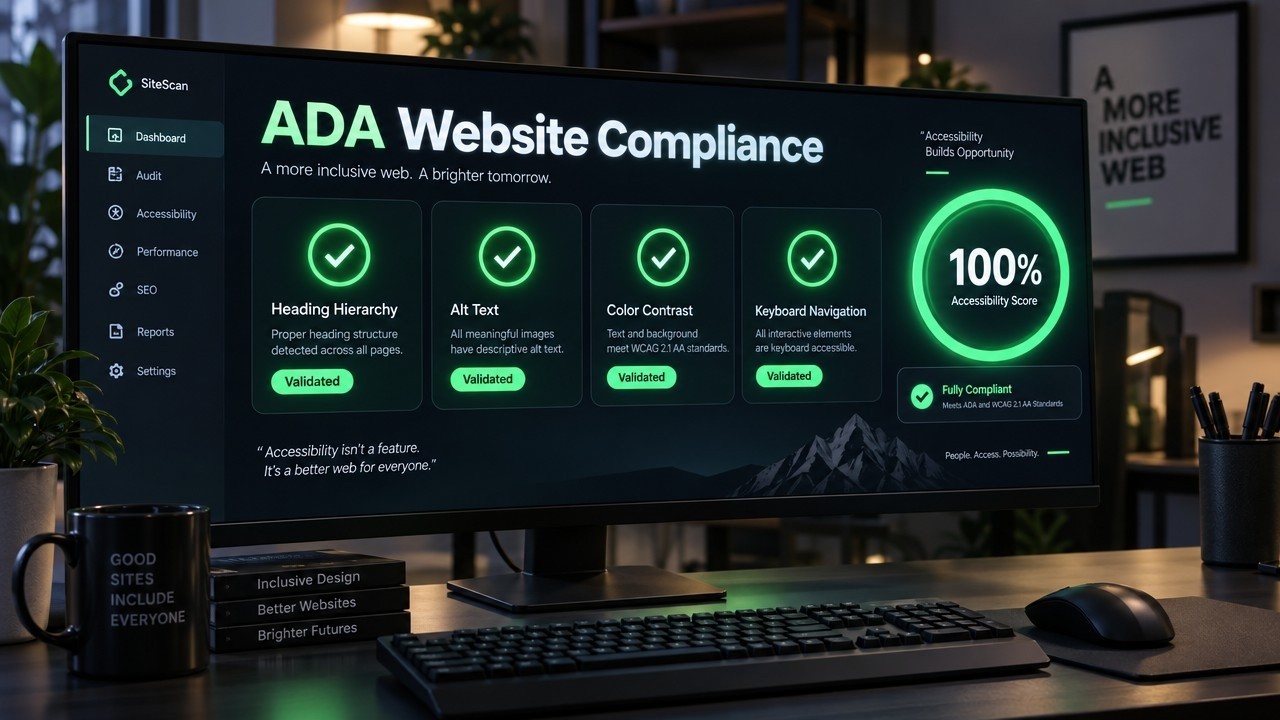
Hybrid ADA compliance services combine AI-powered scanning with human developer review to deliver code-level accessibility fixes at much less than the cost of a full manual audit. AI identifies high-risk violations like missing alt text and poor contrast for developers to follow up and fix—reducing legal exposure without the price tag of traditional remediation.
Full manual audits and remediation can run into the tens of thousands of dollars, putting comprehensive accessibility out of reach for many small and mid-sized organizations. That gap between legal obligation and financial reality is exactly where hybrid ADA compliance services step in.
By pairing artificial intelligence with human developer expertise, our hybrid compliance model delivers a more affordable, faster path to accessibility—one that targets the violations most likely to trigger legal action, without demanding a five-figure remediation budget. Below, we break down how our hybrid model works, what it can and can't automate, and why it stands apart from the "accessibility widget" scam products flooding the market.
How does our hybrid ADA compliance model work?
Our hybrid compliance model uses machine learning technology to scan a website and generate precise, code-level recommendations for ADA compliance. These aren't vague suggestions—they're specific, actionable fixes tied directly to the underlying HTML, CSS, and ARIA markup. From there, our developers review each recommendation and implement the fixes directly in the codebase.
This division of labor is what makes the model both fast and cost-effective. The AI handles the labor-intensive work of scanning thousands of lines of code and flagging violations, while human developers apply the judgment, context, and technical skill needed to implement genuine fixes. Neither piece works as well alone: AI without human review risks inaccurate or incomplete fixes, and manual review without AI assistance is slow and expensive for most budgets.
What accessibility violations can AI detect and fix?
AI-driven scanning technology is specifically engineered to detect categories of accessibility violations that are also the most commonly cited in legal demands and lawsuits. While this model cannot detect every issue that a manual human audit may detect, it is very good at locating:
-
Absent labels on links, buttons, and forms
-
Images lacking descriptive alt text
-
Missing or inaccurate ARIA attributes
-
Improper table captions and header scope assignments
-
Flawed heading structure and hierarchy
-
Insufficient color contrast
-
Missing skip-navigation links and live region alerts
Because AI can flag these issues automatically, clients benefit from reduced manual labor, lower expenses, and faster turnaround times. For organizations unable to fund a comprehensive manual audit and full remediation, this targeted approach offers a viable, budget-conscious alternative—one that addresses the highest-risk issues first rather than leaving a website fully exposed.
Which accessibility issues require human judgment instead of automation?
Not every accessibility barrier can be resolved through automation. Certain issues demand human judgment and remain outside the reach of even sophisticated AI scanning tools. These include:
-
Missing or overly complex landmark regions
-
Links requiring differentiation beyond color alone
-
Custom-built interactive elements
-
Intricate focus order complications
These human-dependent issues can still expose businesses to legal action if left unaddressed. However, a hybrid methodology substantially reduces both legal exposure and remediation expense compared to traditional, fully manual approaches. This is the right choice for businesses that need to reduce the risk of ADA lawsuits and demands, but cannot commit significant resources to that effort.
Start with what matters most
ADA compliance doesn't have to be an all-or-nothing proposition. A hybrid model—AI-powered detection paired with human-implemented fixes—gives organizations a realistic, affordable path to reducing legal risk and improving accessibility for real users. Rather than waiting until a budget allows for a comprehensive manual audit, businesses can take immediate, targeted action on the violations most likely to trigger legal demands, while planning for more complex fixes over time.
If your organization is weighing its options for ADA compliance, start by contacting our office for a review of your website and an analysis of the most appropriate and cost effect method.
















Boca Raton ADA Lawsuit Lawyers
Colorado ADA Defense Services
Houston Americans with Disabilities Act
Miami Americans with Disabilities Lawyer
Missouri ADA Website Defense Attorney
New York City Americans with Disabilities Act
New York Website ADA Lawsuit Defense
Orlando ADA Law Firm
Pennsylvania ADA Website Cases
California Americans with Disabilities Act Information
Riverside California ADA Information
San Francisco ADA Website and Barrier Cases
Orange County California ADA Compliance & Defense
bottom of page