
California Website Accessibility Lawsuits: What SMBs Must Know
California businesses face a rising wave of state court lawsuits alleging that their websites violate the Unruh Civil Rights Act by being inaccessible to visitors with disabilities. Unlike federal ADA claims, California's Unruh Act allows plaintiffs to seek statutory damages of at least $4,000 per violation, making these cases especially costly for small and medium-sized businesses. Acting quickly with legal counsel and a compliance audit is critical.
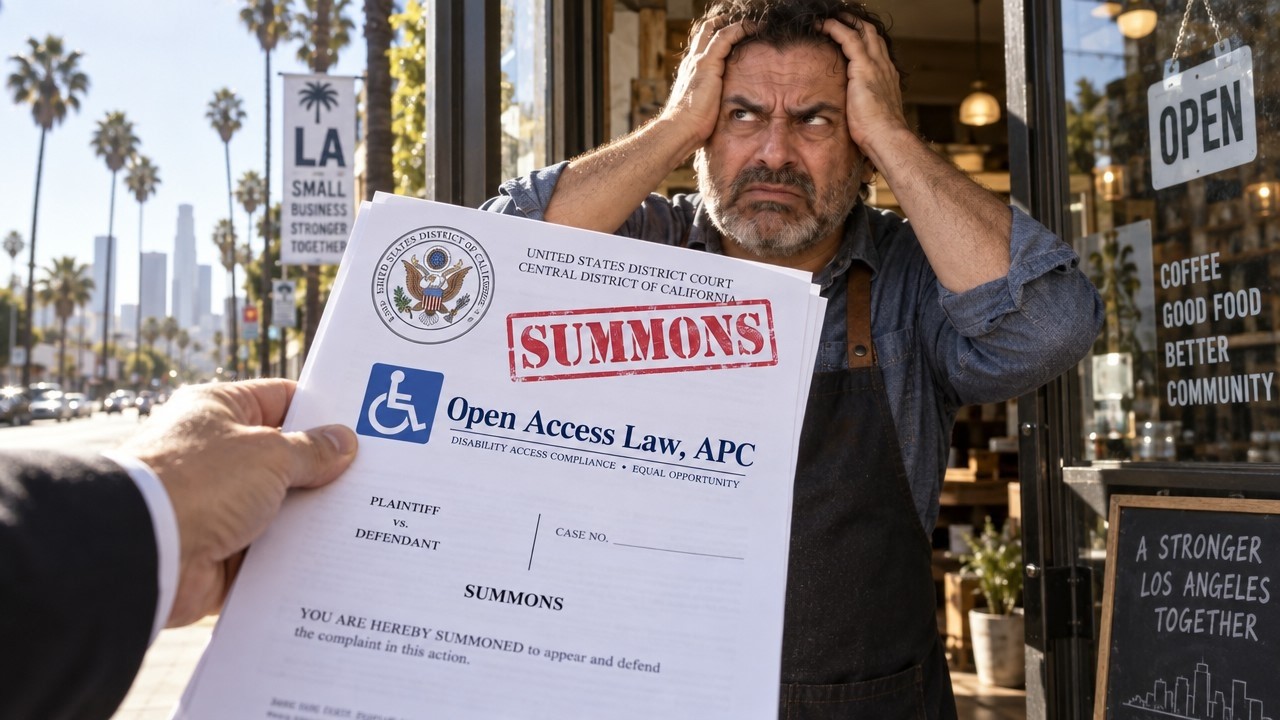
If you run a small or medium-sized business in California and just received a legal notice about your website, you're not alone. California state courts have become a primary battleground for website accessibility litigation, and the financial stakes are often higher than similar cases filed under the federal Americans with Disabilities Act (ADA).
Why Are These Lawsuits Filed in California State Courts Instead of Federal Court?
Many plaintiffs' attorneys prefer California state courts because of the Unruh Civil Rights Act. While Title III of the ADA prohibits disability discrimination at places of public accommodation, it does not provide for statutory damages — a plaintiff generally must prove actual harm to recover money.
California's Unruh Act closes that gap. Courts have interpreted Unruh to incorporate ADA violations automatically, meaning a website that fails to meet ADA accessibility standards can also trigger an Unruh Act claim. Critically, Unruh allows plaintiffs to recover a minimum of $4,000 in statutory damages per violation, without needing to prove significant harm. This financial incentive has made California state courts an attractive venue for filing accessibility-related lawsuits against businesses with public-facing websites.
What Makes a Business Website Vulnerable to an Accessibility Lawsuit?
Most of these lawsuits center on whether a website is compatible with assistive technologies, such as screen readers used by visually impaired users. Common issues that trigger claims include:
Missing alternative text (alt text) on images
Inaccessible forms, menus, or checkout processes
Poor color contrast that affects readability
Videos without captions or transcripts
Websites that cannot be navigated using a keyboard alone
Courts and plaintiffs' attorneys frequently reference the Web Content Accessibility Guidelines (WCAG) 2.1, Level AA, as the industry benchmark for accessibility — even though neither the ADA nor the Unruh Act formally adopts WCAG as a legal standard.
Who Is Being Targeted in These Lawsuits?
Small and medium-sized businesses across nearly every industry — retail, restaurants, professional services, and e-commerce — have been named in these suits. Many business owners are surprised to learn that having a physical storefront doesn't shield them from liability; if your business has a website that customers use to browse products, book services, or make purchases, it can be considered a place of public accommodation subject to accessibility requirements.
Serial plaintiffs, who file dozens or even hundreds of similar lawsuits, are common in this space. This pattern has drawn criticism from some courts and legislators, but it hasn't slowed the volume of filings.
What Should a Business Do After Receiving an California Website Accessibility Lawsuit?
Choose a response strategy based on the specifics of your situation, but these steps apply broadly:
Don't ignore the complaint. Deadlines to respond are strict, and failing to act can result in a default judgment.
Consult an attorney experienced in ADA and Unruh Act defense. General business counsel may not be familiar with the nuances of accessibility litigation.
Commission a website accessibility audit. An independent audit can identify specific WCAG gaps and help your legal team assess exposure.
Evaluate settlement versus litigation. Many cases resolve through settlement, but the right path depends on the strength of the plaintiff's standing and the severity of alleged violations.
Remediate your website. Fixing accessibility barriers reduces the risk of repeat litigation and demonstrates good faith to the court.
Protect Your Business Before the Next Lawsuit Arrives
California's legal environment makes website accessibility a genuine risk factor for small and medium-sized businesses, not a theoretical concern. Taking proactive steps now — auditing your website, training staff, and consulting experienced defense counsel — can reduce your exposure and strengthen your position if a lawsuit does arise.
Frequently Asked Questions
How much can a business be ordered to pay in an Unruh Act website lawsuit? Plaintiffs can seek a minimum of $4,000 in statutory damages per violation under the Unruh Act, plus attorney's fees. Actual settlement or judgment amounts vary based on the number of alleged violations and case specifics.
Does my business need to follow WCAG guidelines by law? WCAG 2.1 Level AA is widely used as a reference standard in litigation and settlements, but it has not been formally codified as a legal requirement under the ADA or the Unruh Act.
Can I be sued even if I have a physical store with no online sales? Yes. Courts have found that websites providing information about products, services, or store locations can still be considered places of public accommodation, regardless of whether transactions occur online.
What is the difference between an ADA claim and an Unruh Act claim? The ADA addresses disability discrimination but does not provide statutory damages. The Unruh Act incorporates ADA violations and allows plaintiffs to recover minimum statutory damages, making California claims potentially more costly.


















Comments