top of page

WEBSITE ADA COMPLIANCE SERVICES
1000+ ADA LAWSUITS HANDLED &
20+ YEARS OF ADA LITIGATION &
100% ATTENTION TO YOUR CASE.
WATCH OUR ADA LAWYER DISCUSS ADA LAWSUITS ON 60 MINUTES WITH ANDERSON COOPER:
Full Website ADA Compliance Services:
A Four-Phase Path to Accessibility
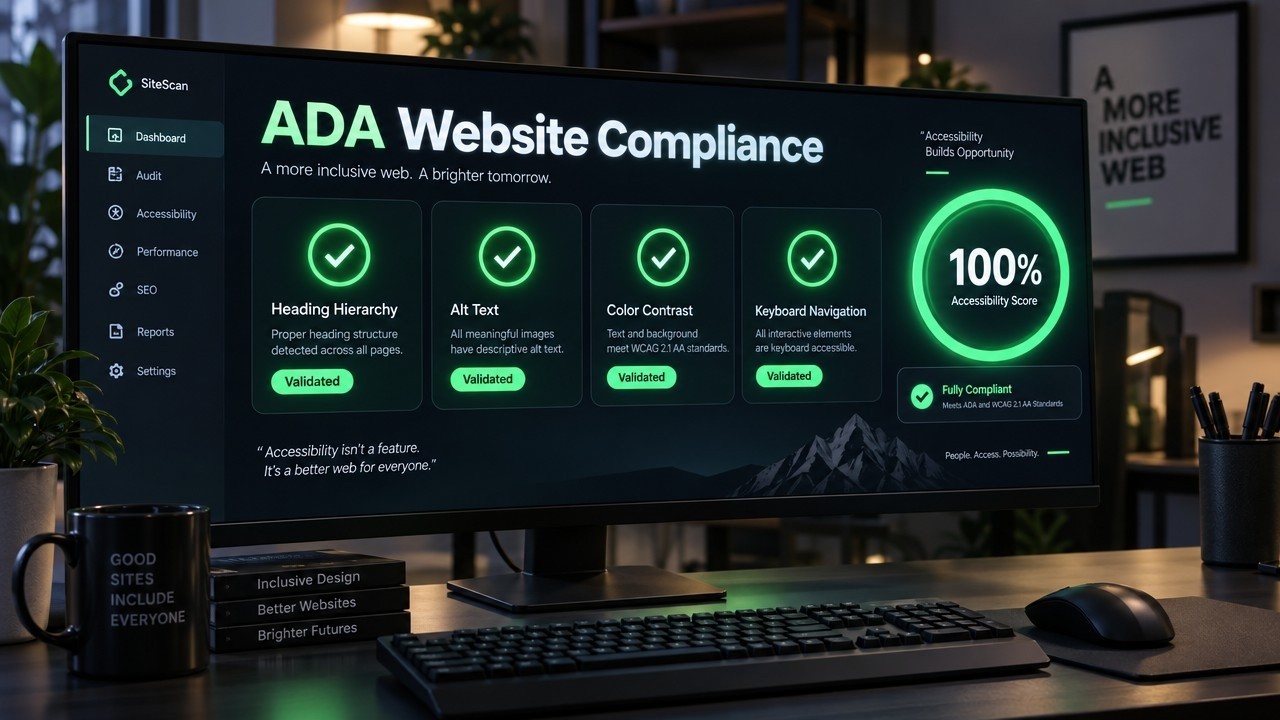
Full website ADA compliance services combine manual expert testing, automated scanning, remediation, and verification to bring your website into alignment with accessibility laws. The process unfolds in four phases—assessment, correction, verification, and closeout—ensuring every issue is identified, fixed, and confirmed before you receive formal certification.
Website accessibility lawsuits continue to rise, and businesses of every size face exposure under the Americans with Disabilities Act (ADA). A single missing alt tag or an inaccessible form field can expose a company to legal risk and, more importantly, can shut disabled users out of your digital front door. Full website ADA compliance services exist to close that gap—methodically, thoroughly, and with documentation to prove it.
Below, we break down what a comprehensive ADA compliance process actually looks like, phase by phase, so you know exactly what to expect when bringing your website into compliance.
What Happens During the Initial Accessibility Assessment?
The assessment phase begins with hands-on evaluation performed exclusively by trained specialists. No automated tools are involved at this stage. Human expertise catches nuances that software alone cannot, which is why manual review comes first.
This human-led examination includes:
-
Assistive technology testing using NVDA, JAWS, and comparable screen reader applications
-
Comprehensive keyboard navigation assessment spanning every critical user pathway
-
Detailed examination of interactive components, including forms, buttons, and modal windows
-
Evaluation of color contrast ratios and visual organization
Only after specialists complete their manual review does automated, AI-driven scanning software examine the site. This technological pass serves as a verification layer, confirming nothing was overlooked during the manual phase. It delivers:
-
Full-scale scanning across every page of the website using a proprietary platform
-
Comprehensive identification of every instance of missing alt text—not a representative sample
-
Detection of absent form labels, ARIA implementation errors, and underlying code issues
-
A thorough issue log documenting all findings for record-keeping
By the end of this phase, you receive a complete diagnostic picture of your site's accessibility standing and the corrective work required to resolve it.
How Are Accessibility Issues Corrected and Implemented?
Once the assessment identifies every issue, specialists execute the necessary fixes. This phase brings the website into alignment with applicable accessibility legislation while optimizing discoverability for both disabled users and search engines—accessible code tends to be cleaner, more semantic code, which search engines reward.
Corrections typically address:
-
Image alt text across the entire site
-
Form field labeling for every input
-
Keyboard accessibility for all interactive elements
-
Contrast ratio compliance for text and visual components
-
Correct heading structure for logical page hierarchy
-
Screen reader compatibility across dynamic and static content
This remediation work is the core of full website ADA compliance services. It's where diagnostic findings become functional, accessible experiences for real users. Once corrections are implemented, the site proceeds to verification testing.
Why Is Verification Testing Necessary After Remediation?
Fixing an issue and confirming the fix worked are two different things. Verification testing exists to catch any correction that didn't fully resolve the underlying problem or introduced a new one.
This phase mirrors the original assessment methodology and includes:
-
Manual re-evaluation of every page previously flagged, using screen reader technology
-
Verification of keyboard functionality and focus sequencing across corrected pathways
-
Automated full-site re-scan via the compliance platform
-
Side-by-side comparison of compliance scores before and after remediation
-
Comprehensive record-keeping of resolved issues for compliance documentation
Documentation proving each issue was resolved—not just addressed—is what holds up if a business later faces an ADA demand letter or lawsuit. With verification complete, the process moves to final closeout.
What Documentation Do You Receive at Closeout?
The closeout phase follows assessment, correction, and verification, and it delivers the paperwork that matters most for legal and operational purposes:
-
Formal Compliance Certification
-
Detailed Remediation Report
-
Accessibility Statement
These documents serve as evidence of good-faith effort and technical compliance, which can be critical if your organization faces an accessibility complaint or demand in the future.
Why Does Ongoing Monitoring Matter After Full Remediation?
Websites are not static. New pages, updated forms, redesigned navigation menus, and third-party plugin updates can all introduce new accessibility barriers—even on a site that was fully compliant at launch. Given that websites undergo constant change, previously compliant sites can drift out of compliance over time.
Choose ongoing monitoring if your website is updated frequently or managed by multiple team members, since each change carries the risk of reintroducing accessibility issues. Without continuous oversight, the investment made in full remediation can erode within months.
Moving Forward with Website Accessibility
Full website ADA compliance services are not a one-time checklist item—they're a structured, four-phase process designed to protect your business and serve every visitor to your site. Starting with hands-on specialist assessment, moving through targeted correction, confirming results with independent verification, and closing out with formal documentation gives you both a genuinely accessible website and the paper trail to prove it.
If your website hasn't undergone a comprehensive accessibility assessment, now is the time to start. The earlier issues are identified, the lower your legal exposure and the better the experience for every visitor who relies on assistive technology.
Contact us today to begin the process of making your website ADA compliant and managing the risk of ADA lawsuits and demands.
















Boca Raton ADA Lawsuit Lawyers
Colorado ADA Defense Services
Houston Americans with Disabilities Act
Miami Americans with Disabilities Lawyer
Missouri ADA Website Defense Attorney
New York City Americans with Disabilities Act
New York Website ADA Lawsuit Defense
Orlando ADA Law Firm
Pennsylvania ADA Website Cases
California Americans with Disabilities Act Information
Riverside California ADA Information
San Francisco ADA Website and Barrier Cases
Orange County California ADA Compliance & Defense
bottom of page