
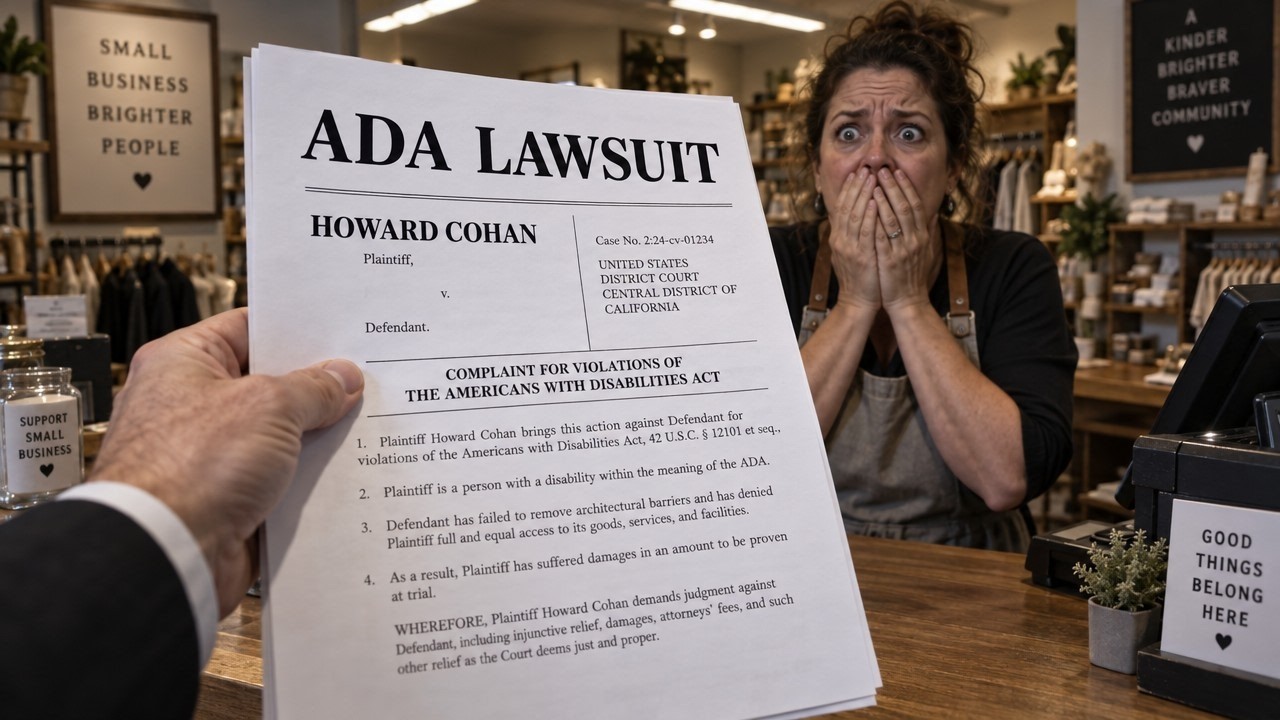
Received an ADA Claim from Howard Cohan? Here's What to Do Next.
If your business received a lawsuit or demand letter from Howard Cohan citing ADA Title III violations, don't ignore it — the standard federal response deadline is generally 21 days after service. Contact an ADA defense attorney immediately, notify your insurance carrier, and avoid making unplanned repairs before consulting counsel on evidence preservation.
Most cases resolve through a settlement focused on remediation and attorney's fees, not monetary damages to the plaintiff. A lawsuit or demand letter naming Howard Cohan, a Florida-based plaintiff who files numerous ADA Title III suits against business properties, can feel alarming and confusing, especially if you've never dealt with an accessibility complaint before. You're not alone, and this situation is more common — and more manageable — than it may seem right now.
This guide explains what Title III of the ADA actually requires, why plaintiffs like Howard Cohan can bring these claims, and the concrete steps you should take to protect your business, your reputation, and your bottom line.
What is Title III of the ADA, and why does it apply to my business?
Title III of the Americans with Disabilities Act (42 U.S.C. § 12181 et seq.) covers "places of public accommodation" — a broad category that includes stores, restaurants, hotels, and offices open to the public. If customers or clients can walk into your property, Title III likely applies to you.
Under Title III, businesses must remove architectural barriers where it is "readily achievable" — meaning easily accomplished without much difficulty or expense. New construction and renovations must also meet the 2010 ADA Standards for Accessible Design. Common complaint areas include:
Parking spaces and access aisles
Accessible routes and entrances
Restrooms
Service counters
Signage
What financial exposure am I actually facing?
This is often the first fear for business owners, and the answer offers some reassurance. Private plaintiffs under Title III can generally seek injunctive relief — a court order requiring you to fix the barriers — and attorney's fees, but not monetary damages (42 U.S.C. § 12188(a)). That said, attorney's fees and remediation costs can still add up quickly, which is exactly why a fast, informed response matters.
What should I do in the first 48 hours after receiving a Howard Cohan demand or legal claim?
Don't ignore it. The clock is running, and the typical deadline to respond in federal court is 21 days after service — confirm your exact deadline with counsel.
Call an ADA Title III defense attorney. This is a specialized area of law, and experienced counsel can assess standing, verify the claims, and protect your interests.
Notify your insurance carrier. Check your general liability policy; some policies offer coverage or defense support for ADA claims.
Document your property's current condition — but don't make unplanned repairs yet. Unplanned fixes before consulting counsel can complicate evidence preservation strategies.
Verify the claim against reality. Confirm whether you own or lease the property, review your lease to determine landlord versus tenant responsibility, and check whether the alleged barriers actually exist.
How do I create a long-term compliance plan?
Once the immediate legal response is underway, focus on building lasting protection:
Commission a professional accessibility audit (CASp-certified or equivalent ADA consultant) to identify vulnerabilities before they become lawsuits.
Plan remediation with a realistic timeline and budget based on what's "readily achievable" for your business size.
Train your staff on accessibility basics so they can support ongoing compliance.
Schedule periodic re-audits to catch new issues as your property or regulations change.
Small businesses may also qualify for federal tax incentives that offset these costs: the Disabled Access Credit (IRC Section 44), worth up to $5,000 per year for businesses with $1 million or less in revenue or 30 or fewer full-time employees, and the Barrier Removal Deduction (IRC Section 190), worth up to $15,000 per year. Confirm eligibility with a tax professional before claiming either.
Protect Your Business and Your Reputation
An ADA demand letter feels like a crisis, but it's also an opportunity to resolve legal risks, ensure ADA compliance, and strengthen your business for every future customer who walks through your door. Most cases resolve through a settlement focused on remediation and fees, not prolonged litigation.
The most important step you can take right now is to consult a licensed ADA defense attorney and schedule a professional accessibility audit. Acting quickly and deliberately — rather than panicking or ignoring the notice — gives you the best chance at a fast, cost-effective resolution and lasting peace of mind.
This article provides general information only and does not constitute legal advice. Consult a licensed attorney regarding your specific situation.
Frequently Asked Questions
How long do I have to respond to an ADA lawsuit? In federal court, the standard response deadline is generally 21 days after service of the complaint. Confirm your exact deadline with an attorney, since timelines can vary by jurisdiction and circumstances.
Will I have to pay monetary damages to the plaintiff? Generally, no. Private plaintiffs under Title III can seek injunctive relief (a court order to fix barriers) and attorney's fees, but not money damages, under 42 U.S.C. § 12188(a).
What if I lease my building instead of owning it? Review your lease carefully. Responsibility for ADA compliance often depends on whether the lease assigns barrier-removal obligations to the landlord or the tenant. An attorney can help clarify your specific obligations.
Should I fix the alleged barriers right away? Document the property's current condition, but hold off on unplanned repairs until you've consulted an attorney. Premature fixes can complicate evidence preservation and your legal strategy.
Are there alternatives to going to trial? Yes. Many ADA Title III cases resolve through a consent decree or settlement that focuses on a remediation plan and payment of attorney's fees, avoiding the time and cost of a full trial.


















Comments